
Where to Invest in Cryptocurrencies, and How to Do It Safely
What Is Cryptocurrency
Cryptocurrency is a digital or virtual currency that uses cryptography for security. Transactions are verified on decentralized computer networks and recorded on a blockchain, a distributed public ledger. The original goal was to give people more control over their money without relying on banks or other financial intermediaries.
If you want to understand how this digital money actually works , the short version is: blockchain tech, cryptographic protection, and verification by multiple network nodes make double-spending and tampering difficult. The Brooklyn Coop post defines cryptocurrency as a "network-based digital currency that is not reliant on any central authority, such as a government or bank, to uphold or maintain it."
Market Basics and Price Moves
The price of a cryptocurrency is its real-time market quote for one unit, usually in U.S. dollars. Several factors can contribute to price fluctuations. Utility and adoption can affect demand. A coin with more buyers and sellers generally has greater liquidity, which the source material associates with more stable prices. Assets with fewer buyers and sellers may experience larger price swings.
Supply and demand also influence prices. Some cryptocurrencies have a limited supply, so an increase in demand can cause the price to rise sharply. If supply exceeds demand, the price can fall rapidly. Market sentiment can affect price movements too. Security breaches, investor sentiment, bans, regulations, and media attention can all influence prices.
Market cap categories
- Small-cap: below $1 billion. More volatile, more risk, but potentially greater growth.
- Mid-cap: $1 billion to $10 billion. Higher potential, increased risk.
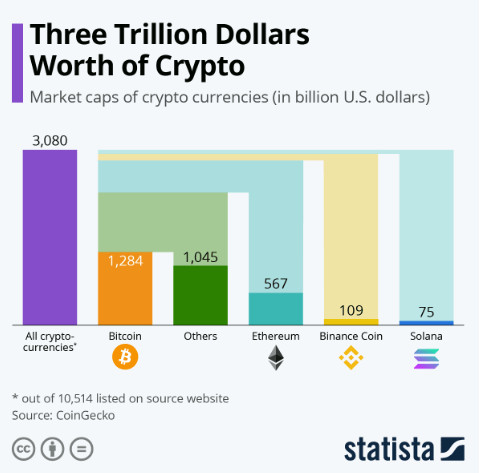
- Large-cap: above $10 billion. Ethereum and Bitcoin are examples. More stable, but slower growth.
An investor can choose among the categories or invest in a mix to diversify a portfolio and attempt to mitigate risk. Market capitalization does not remove the possibility of a large loss, but it is one way to compare assets with different levels of adoption and size.
Historical Bull Runs
The source material describes several Bitcoin bull cycles. The first bull run is labeled 2009-2011. Bitcoin started trading almost valueless, then reached $1 in February 2011 and $31 in June 2011. The reported increase was more than 1,000,000 percent, attributed to interest from early investors following the 2008 recession.
The second bull cycle followed a correction that took Bitcoin to around $2 in 2011. By November 2013, Bitcoin had reached approximately $1,163, an increase of more than 58,000 percent from the previous low. The first Bitcoin halving, which occurred in November 2012, is identified as a major influence on the 2013 increase.
The third bull market began after Bitcoin reached a low of around $200 in 2015. The cycle started in late 2015 and lasted about two years, until December 2017. Bitcoin rose to around $20,000 during this period. Broader acceptance of cryptocurrency, initial coin offerings that attracted traders, and growth in the number of retail crypto investors are given as influences.
The fourth bull run began in March 2020 after Bitcoin closed 2018 at around $3,700. Bitcoin initially reached approximately $5,000 in 2020. Pandemic-related crypto hype, institutional and retail interest, and growth in decentralized finance were followed by an all-time high of about $65,000 in April 2021. The market remained bullish until November 2021, when Bitcoin reached another reported high of about $69,000.
The fifth bull run is described as beginning in 2023 and continuing into 2024. Bitcoin reached a low of approximately $16,000 in December 2022, and the downward trend continued into 2023. The anticipated 2024 Bitcoin halving and the potential approval of spot Bitcoin exchange-traded funds by the U.S. Securities and Exchange Commission were given as factors supporting the recovery. Bitcoin reached a reported all-time high above $73,000 in March 2024.
A bull market is a period in which crypto prices generally move upward. Positive investor sentiment can contribute to a bull market by increasing demand while reducing available supply. But there is no assurance that a bullish trend will last because the crypto market is volatile.
Selecting a Cryptocurrency
There are no hard-and-fast rules for choosing a cryptocurrency. The Kaspersky security article states that almost any token can rise sharply on one day and collapse on the next. It advises beginners to study the market and be cautious with unfamiliar or risky assets. A coin with a track record and demand among traders may be easier to sell than a little-known altcoin. A higher market capitalization is also described as generally being associated with lower risk.
Total newcomers are encouraged to consider Bitcoin or Ethereum before taking positions in obscure altcoins. More aggressive investors may choose newer altcoins because they are cheaper and may promise faster profits, but these assets may have low demand and be difficult to convert into real money. The article says investors should not put all their eggs in one basket and should diversify across several cryptocurrencies.
Assets named in the source
- Bitcoin: the original cryptocurrency, described as one of the safer options with secure verification.
- Ethereum: both a cryptocurrency and a programmable blockchain platform supporting smart contracts and apps.
- Litecoin: peer-to-peer currency for fast, low-cost transactions, sometimes called "digital silver."
- Tether, USDT, USDC: stablecoins backed by fiat currencies, intended to maintain one-to-one value.
- Binance Coin, XRP, Solana, Avalanche: other named assets with different use cases.
- Dogecoin, Shiba Inu: highly volatile meme coins with substantial upside and large losses.
Where and How to Buy Cryptocurrency
A beginner can follow a basic sequence. First, learn how cryptocurrency and blockchain work. Then decide whether direct ownership, an exchange account, a brokerage app, a fund, or a retirement account is appropriate. Research the specific coin, its use case, market capitalization, development activity, liquidity, and risks.
Choose a platform that supports the intended asset and the user's country. Open an account and complete identity verification. Link a payment method and fund the account. Buy a small amount if the goal is to test the process. Record the purchase, wallet, keys, and transaction details. Move assets to an appropriate wallet if the platform supports withdrawals and the investor intends to hold them independently.
Basic buying steps
- Learn how cryptocurrency and blockchain work.
- Decide whether direct ownership, an exchange account, a brokerage app, a fund, or a retirement account is appropriate.
- Research the specific coin, its use case, market capitalization, development activity, liquidity, and risks.
- Choose a platform that supports the intended asset and the user's country.
- Open an account and complete identity verification.
- Link a payment method and fund the account.
- Buy a small amount if the goal is to test the process.
- Record the purchase, wallet, keys, and transaction details.
- Move assets to an appropriate wallet if the platform supports withdrawals.
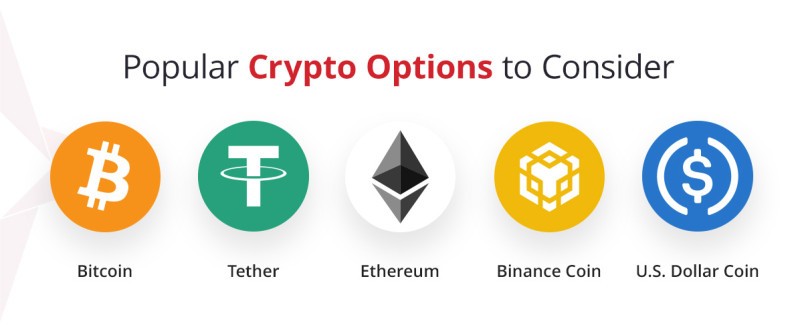
The Accuplan material says a cryptocurrency price can rise or fall rapidly and that investors should not choose a coin solely because its price is increasing. It gives Bitcoin, Tether, Ethereum, Binance Coin, and U.S. Dollar Coin as examples of assets to consider. The exact process varies by platform. A person may register with an email address or phone number and then verify identity with a government-issued ID. A payment method must be linked before purchases can be made.
Exchanges and Broker Apps
An exchange marketplace or broker app can be used to buy crypto. The Accuplan article says exchanges can be complex for beginners, while broker apps may be easier to use but often have significantly higher fees.
A White Coat Investor article dated May 2022 lists several exchange and brokerage options. Binance, Coinbase, FTX, KuCoin, Gate.io, Kraken, Huobi Global, and Bitfinex are named as cryptocurrency exchanges. Coinbase was the largest exchange available to U.S. residents at the time, although it was only about one-quarter the size of Binance, which was not available in the United States. Coinbase was as large as the next three exchanges combined.
Coinbase's reported trading fees were 0.5 percent to 3.99 percent per trade. Coinbase Pro was described as the actual exchange rather than the simplified retail interface. Its fees were usually no more than 0.5 percent. Robinhood was described as offering no trading fees, with the company making money through order routing. It listed 16 tradeable cryptocurrencies, but Nevada and Hawaii residents were said to be unable to use the option. Webull was described as not technically charging a fee but applying a 1 percent markup to the cost of the currency, with a $1 minimum. It listed 20 tradeable cryptocurrencies at the time.
Payment Routes and Platforms
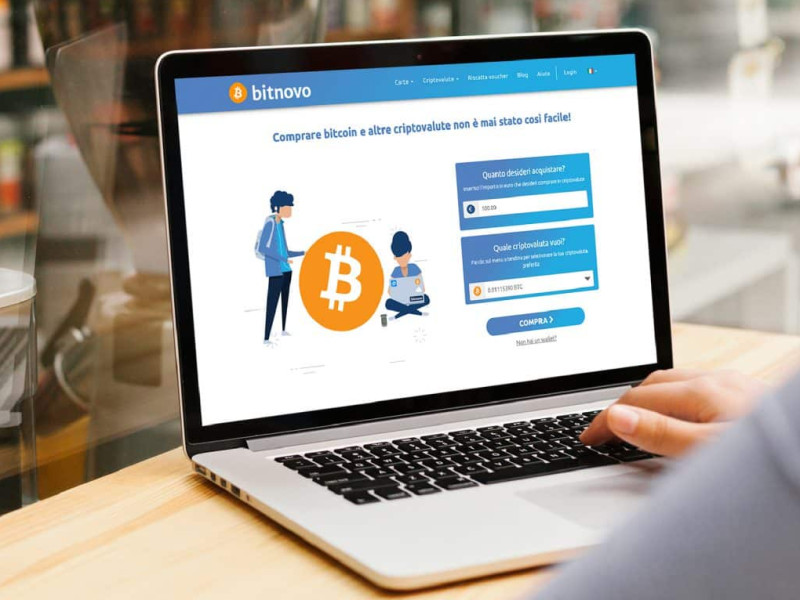
A Bitnovo guide dated February 2023 describes several ways to buy crypto while avoiding sites that promise unrealistic returns. It says a person needs a crypto wallet before purchasing and should understand the different wallet types first. The guide says traditional credit institutions generally do not allow customers to buy cryptocurrency directly at the bank. It describes an indirect alternative in which a person buys through an online platform that accepts bank transfers or debit and credit cards.
The guide characterizes bank-transfer and card-payment systems as traceable and potentially safer than some alternatives. PayPal is presented as another payment route. The guide says some people prefer it because they already have a PayPal account and because PayPal may appear to provide an additional layer of security after many crypto-related scams. The buyer should account for both the cryptocurrency platform's fee and PayPal's commission.
The guide describes direct online crypto platforms as another option. These platforms allow a person to buy crypto directly with a debit or credit card, bank transfer, or another cryptocurrency. It says direct purchase allows the buyer to acquire crypto without trading directly with other investors and that the platforms offer a wide range of digital assets.
Bitnovo is described as a payment gateway established in Spain in 2014. It says the service allows customers to buy Bitcoin and more than 20 types of cryptocurrency. It also provides crypto ATMs and vouchers that can be redeemed with cryptocurrency through thousands of physical and online stores.
How to Get a Wallet for Cryptocurrency
A crypto wallet is used to store digital assets. In some cases, the investor is also responsible for keeping the keys. A person who intends to buy crypto should understand whether the platform provides custody, whether withdrawals are supported, and who can access the private keys. This is a critical step for setting up your own storage .
Hot and warm wallets are software-based and described as permanently connected to the internet. They allow quick transfers and are convenient for active trading. Their internet connection makes them more vulnerable to hacking than offline storage. If a hot wallet is used, the article recommends enabling two-factor authentication. It recommends receiving the authentication code through an authenticator app or another method rather than by text message because of the risk of SIM cloning. The article refers to an incident in which one investor lost more than $70,000 after a hacking incident.
Cold wallets are standalone devices that are commonly shaped like a flash drive or keychain. The most popular models were priced at approximately $50 to $200 in the 2020 article. They are used to store crypto offline and are described as more secure than exchange-held hot wallets. The article recommends keeping only funds needed for near-term transactions on an exchange and storing most assets in a cold wallet. Exchange platforms are described as frequent targets for cybercriminals.
Keys, Passwords, and Recovery Information
Wallet developers may display passwords, codes, or other recovery information only once during setup. The Kaspersky article says these details should be recorded securely. It says paper can be used if it is protected from loss or damage, but a password manager is described as safer. It also says that a person who forgets a key may be unable to restore access to the wallet and could lose the assets. The article refers to a Silicon Valley worker who reportedly discarded a flash drive containing a wallet worth millions.
A person should not store a recovery phrase or private key in an ordinary email account, photograph, or unprotected note. The source-grounded points are to use secure storage and preserve the information required for recovery. This is one of those parts where getting the storage right matters most.
Avoiding Scams and Protecting Transactions
A Kaspersky article by Egor Nashilov, dated October 2020, describes the cryptocurrency market as resembling the Wild West. It says one decision can produce gains of several hundred percent while another can result in a complete loss in a single day. It focuses on choosing assets carefully, examining platforms, protecting exchange accounts, securing wallets, and avoiding fraud.
The article says a person should study the market before signing up for an exchange and should avoid risky transactions when starting. It recommends examining altcoins carefully because some projects are Ponzi schemes or outright scams. PlusToken is used as an example. The service promised returns of 10 percent to 30 percent per month and attracted more than 3 million people, many of whom were outside China. The article says PlusToken was worth $17 billion at its peak in spring 2019. Early investors reportedly received some promised returns, but the platform was described as a Ponzi scheme.
XtraderFX is another example. The platform had closed in the United Kingdom and had used well-known faces from television and finance to advertise its services. The article lists warning signs of dubious crypto projects: team members have no previous mentions in crypto-related news, project members may be actors or famous people using different names, the creators promise guaranteed profits, and the project's GitHub repository is almost never updated, which may indicate that the project is not active or that no permanent maintainer is assigned.
Warning signs of dubious crypto projects
- Team members have no previous mentions in crypto-related news.
- Project members may be actors or famous people using different names.
- The creators promise guaranteed profits.
- The project's GitHub repository is almost never updated, which may indicate inactivity.
A promised guaranteed return is especially associated with Ponzi schemes. If one of these warning signs is present, the article says to reconsider the investment. In mid-2020, scammers compromised Twitter accounts belonging to Elon Musk, Bill Gates, Kanye West, and other celebrities. The compromised accounts posted offers to double the number of coins sent by users. The article says the scammers obtained more than $100,000 in a few hours. The general warning is not to trust an offer of free coins, especially when the offer uses a celebrity's name or image. An offer that requires a person to deposit money in advance is described as a likely trap.
Secure Communication and Devices
The article recommends using a secure communication channel for cryptocurrency transactions. It says public Wi-Fi can allow criminals to intercept transaction details or spoof a website. A properly secured home network is described as safer than a public network. The article recommends changing the default router password because factory passwords may be the same for every router of a particular model. It also recommends using an encrypted VPN connection, paying attention to connection speed and the number and quality of servers, and choosing a VPN with a kill switch.
A kill switch disconnects the device from the internet if the secure connection drops, preventing data from being sent unencrypted. The article specifically recommends Kaspersky VPN Secure Connection for cryptocurrency transactions and describes it as optimized for that use. It also recommends reliable security software on computers and phones because malware designed to steal cryptocurrency keys is a significant risk.
The source material's security summary: study the market before opening an exchange account, diversify across several cryptocurrencies, examine altcoins carefully for Ponzi schemes, keep most crypto in an offline or cold wallet, store passwords and recovery information safely, ignore promises of free coins including celebrity promotions, protect the internet connection, and use antivirus or other security software on every device used for trading.
Portfolio Allocation and Investment Strategies
The source material contains different views about how much money should be allocated to crypto and whether crypto should be treated as an investment or speculation. The White Coat Investor article says most people will only dabble in cryptocurrency. It suggests that a person in that category might use a few hundred or a few thousand dollars, provided the amount is well below 5 percent of the portfolio.
The author says a person who believes cryptocurrency is a long-term asset class should put at least 5 percent of the portfolio into it. At the same time, the author says no single asset class should exceed 25 percent of the portfolio. The author's largest allocation is described as the U.S. stock market at 25 percent. Under that framework, the amount allocated to cryptocurrency would be between 5 percent and 25 percent. The author says allocating 40 percent or 60 percent of a portfolio to cryptocurrency is likely a mistake. It could pay off, but the article says an investor does not have to take that risk to reach financial goals.
The article says 50 percent drops occur every year and 90 percent to 99 percent declines are not uncommon when a cryptocurrency falls out of favor. It refers to the collapse of the UST stablecoin, which one analyst called "one of the largest fiascos in crypto-market history." The author says it can be difficult to recover from that type of loss. Many doctors and other investors are described as buying cryptocurrency while acknowledging that they are speculating with a small percentage of their portfolios.
The author also states that he personally does not invest in cryptocurrency because he considers it too volatile and does not need to take the risk at that point in his life.
The White Coat Investor article characterizes cryptocurrency primarily as a short- to medium-term momentum play. The author says data over hundreds of years indicates that a simple moving average can help time a market when timing is necessary. The stated rationale is that markets tend to continue moving in their current direction for a time. The author says cryptocurrency is driven by animal spirits and crowd behavior and that logic alone may not provide a reliable value estimate.
Trading methods
- Day trading attempts to capture price changes within one day.
- Swing trading attempts to capture changes over several days or weeks.
- Dollar-cost averaging invests a fixed amount over a specific period.
- Experienced traders may use leverage in spot and futures markets.
Dollar-cost averaging, or DCA, involves investing a fixed amount at regular intervals over a specified period. The Zypto material presents DCA as a way to mitigate volatility and reduce dependence on one purchase date. The Zypto article describes holding, or "hodling," as a buy-and-hold strategy. A risk-averse long-term investor may buy during a bear market and hold until a bull market. The potential benefit is participation in a price increase, while the risk is that the asset may never recover from a decline.
Profit-Taking and Diversification
A bull market can encourage investors to hold in hopes of further gains, but the price can decline sharply without warning. The Zypto article recommends setting a target price and taking profit when the asset reaches that level. Taking profit may mean missing additional gains, but it can protect gains already earned. The White Coat Investor article describes three circumstances in which it considers selling: the price has just started to fall, it becomes apparent that the cryptocurrency is not likely to be a long-term winner, or the investor has already made a very large gain.
The author says he considers Bitcoin unlikely to be the long-term winner in crypto because it is slow and energy-intensive and lacks the functionality of some later-generation cryptocurrencies. He says Ethereum appears to be adapting and should not necessarily be sold at that time, while Solana and Avalanche are examples of assets he would monitor. These are the author's personal views, not a universal selling framework.
The Zypto article recommends a diversified basket of assets rather than a single cryptocurrency. It gives Bitcoin, stablecoins such as USDT, and meme coins such as Dogecoin and Shiba Inu as examples. It describes meme coins as highly volatile with potential gains and says the basket should contain assets that complement one another. The article's other tips are to have an investment plan, conduct adequate research, diversify, use technical-analysis tools, avoid investing because of fear of missing out, and use secure and reputable exchanges.
Staking and Earning Rewards
Staking is described as a way to lock a proof-of-stake asset in a staking pool for periodic rewards. The Zypto article gives Ethereum as an example and states that a supported platform might display an annual percentage yield of 34.20 percent. It also describes flexible staking, which allows coins to be withdrawn while accrued interest is retained. The 34.20 percent figure is an example reported in the 2024 article, not a general current rate or guarantee. Staking rewards, liquidity, platform solvency, lockup rules, and the value of the staked asset can all affect the actual result.
The White Coat Investor author takes a different position and says that stablecoins should not be included in a speculative crypto portfolio. The sources therefore differ on whether stablecoins can be used to balance a portfolio or should be avoided in favor of non-stable assets.
Self-Directed IRAs and Other Retirement Accounts
An Entrust Group article dated May 2022 describes investing in cryptocurrency through a self-directed IRA, or SDIRA. It says a traditional or Roth SDIRA can combine a tax-advantaged retirement strategy with a cryptocurrency investment strategy. The Entrust material says cryptocurrency investments can be made in small amounts and that there may be no minimum investment requirement. It says the developing asset class may have room for growth and that a maximum supply of units can be viewed as protection against inflation.
The Accuplan material says a specialized self-directed IRA is needed to invest in cryptocurrency with a retirement portfolio. It gives several rules: contributions generally must be made in cash, money can be rolled over from another retirement account such as a 401(k), a rollover is an exception to the cash-contribution rule, and the amount contributed must remain within the applicable IRS annual contribution limit. Self-custody is not allowed in the IRA. The account holder cannot personally hold the private keys or personally use the IRA assets in a way that would disqualify the account. A custodian or qualified trustee must control the assets. Family members and business entities cannot transact with the IRA in ways prohibited by the account rules. The custodian must report the fair market value of the IRA assets annually.
The rule against self-custody applies to the IRA described by Accuplan. It does not mean that a personal, non-retirement crypto wallet cannot be self-custodied. The rules and permissible custody arrangements vary by account and provider, so the source material's personal-wallet guidance and IRA guidance must be kept separate.
Steps to open a self-directed IRA for crypto
- Open the SDIRA.
- Fund it through a transfer, rollover, or cash contribution within applicable limits.
- Select the cryptocurrency or other digital assets.
- Establish the approved wallet, exchange, fund, or LLC arrangement.
- Complete the custodian's purchase, valuation, and reporting requirements.
- Keep records of contributions, acquisitions, valuations, distributions, and any related fees.
The Accuplan material recommends choosing a self-directed IRA custodian with experience supporting digital assets. The person should research which coins the custodian supports, decide whether those coins fit the investor's objectives, ask about the custodian's security features, review its policies for retirement investments, and confirm that it has experience with crypto IRAs and other nontraditional retirement plans. After selecting a custodian, the general steps are: open the SDIRA, fund it through a transfer, rollover, or cash contribution, select the cryptocurrency or other digital assets, establish the approved wallet, exchange, fund, or LLC arrangement, complete the custodian's purchase, valuation, and reporting requirements, and keep records of contributions, acquisitions, valuations, distributions, and any related fees.

Investing Through a Digital-Asset Fund
The Entrust material describes a digital currency fund as an indirect investment structure. Similar to a mutual fund, the fund may invest in the stocks of companies that hold cryptocurrency or provide cryptocurrency-related services. This approach can provide an indirect way to invest in crypto without holding a wallet or private keys. The described process is: open the SDIRA, fund the account through a transfer, rollover, or cash contribution, review and submit the investment sponsor's subscription or purchase agreement, and submit a Buy Direction Letter for Private Placement through the Entrust Client Portal. The SDIRA may pay associated fund fees. Fund investments may also include restrictions on access to the shares or on the ability to sell them.
Investing Through an IRA LLC
An LLC is another structure described by Entrust. The source says an LLC may provide potential liability protection and direct access to retirement funds through checkbook control. Establishing and maintaining an LLC also creates costs. The process is: open the SDIRA, fund it through a transfer, rollover, or cash contribution, set up an LLC, submit the operating agreement and a Buy Direction Letter for Private Placement through the Entrust Client Portal. The LLC is treated as the asset in the SDIRA in this arrangement. Use the LLC to invest in cryptocurrency through a private wallet or an exchange. The Entrust material says the SDIRA can hold a private wallet or use a wallet on an exchange platform. It also says investors may be responsible for tracking the keys to a digital wallet.
Self-Directed 401(k) and Brokerage-Window Options
The White Coat Investor material describes several other retirement-account routes. A self-directed IRA or self-directed 401(k) may be offered through an LLC, a checkbook IRA or 401(k), or a partnership with an exchange such as Gemini. These arrangements can provide direct access to cryptocurrency, but fees vary. In May 2022, Fidelity announced that it would offer a Bitcoin option inside its 401(k) plans, allowing customers to allocate up to 20 percent of account assets to that digital currency. A person who does not have a self-directed IRA or 401(k) may have access to crypto-themed ETFs or trusts through a brokerage-window option. Examples named in the article are PCRA at Schwab and Brokeragelink at Fidelity.
The article describes several funds and trusts: BITO and BTF generally invest in Bitcoin futures rather than Bitcoin itself. Their expense ratios are reported as approximately 0.95 percent. GBTC is described as a closed-end trust rather than an ETF. Its expense ratio is reported as 2 percent, and it was trading at a 14 percent discount at the time of the article. BLOK is an ETF with an expense ratio of 0.71 percent that invests in companies operating in the cryptocurrency space rather than in cryptocurrency itself. BLCN, LEGR, BITQ, and BKCH are described as cryptocurrency equity ETFs. BITW is described as a trust that invests in the top 10 cryptocurrencies. It is compared with an index-fund-like approach but is said not to have an index-fund-like price. Its expense ratio is reported as 2.5 percent, and it was trading at a 10 percent discount to net asset value. The article says the discount could increase or decrease.
The material also states that the SEC approved spot Bitcoin ETFs in January 2024, allowing investors to use firms such as BlackRock or Fidelity to invest in Bitcoin through a more traditional ETF structure. This statement appears in a source article originally dated May 2022, so the January 2024 information appears to be a later update within the material.
Retirement-Account Tax Descriptions
The Accuplan material describes several potential tax advantages. It says cryptocurrency may provide diversification, growth potential, and a hedge against inflation. It also says that using an IRA can provide tax advantages that are not available in the same way outside a retirement account. One part of the article says that because funds in an IRA have already been subject to taxes, investing in crypto inside the IRA may avoid the capital gains tax that would typically be owed on a non-IRA investment. It says tax would be paid when money is withdrawn and that the investor's tax bracket might be lower at that time. The article also uses the phrase "tax-free profits at retirement" in its FAQ.
The Entrust material uses the broader description "tax-advantaged" and discusses both traditional and Roth IRAs. The source material therefore contains both tax-deferred language and tax-free or reduced-capital-gains language without providing one universal tax treatment. Tax outcomes depend on the type of account, contributions, distributions, and individual circumstances. The Accuplan disclaimer says that its information is educational and is not accounting, legal, tax, or investment advice.
Provider-Specific Descriptions
The Accuplan material says it has helped clients with nontraditional retirement investments since 1985. It says its employees have at least nine years of experience, offers access to Bitcoin, Ethereum, Litecoin, and other digital assets, provides 24/7 support, and uses flat fees. It also states that the listed annual fee is $349.95. The same material says Accuplan is a third-party administrator rather than a custodian. Custodial services for self-directed retirement accounts are provided by American Estate & Trust, a Nevada-chartered trust company. Accuplan states that it does not hold, manage, or exercise discretion over account assets and that investment decisions are made solely by the account holder.
The Entrust material says the company has provided self-directed retirement and tax-advantaged account administration for more than 40 years. It says administrators can assist with purchasing alternative investments and buying and selling assets that are typically unavailable through banks and brokerage firms. The Entrust material also describes a webinar titled "Digital Asset Investments: Navigating Today's Blockchain Market." Cory Rodriguez and Judd Kitzmiller of NFN8 are identified as speakers. The webinar reportedly covered how digital assets are created and what makes them valuable, how to evaluate volatility and market trends, passive ways to invest in different sectors through an IRA, and how to maintain exempt IRA status by complying with investment and reporting requirements.

Differing Perspectives and Unresolved Conflicts
The sources take different positions on cryptocurrency's role in a portfolio. The Accuplan material emphasizes diversification, growth potential, inflation hedging, tax advantages, and the possibility of using crypto as a long-term retirement asset. The White Coat Investor article calls cryptocurrency primarily a speculative asset and describes a short- to medium-term momentum strategy. It says a person should not invest serious money without a clear logical reason. The Brooklyn Coop article says the weaknesses of crypto as an asset class outweigh its potential upside and states that the author would not advise people to buy it. It nevertheless says that a person who invests despite the risks might limit speculation to Bitcoin and Ethereum. The Zypto article emphasizes the possibility of gains during a bull market but states that predictions are speculative and that nothing is guaranteed.
There are also differences in how Bitcoin is characterized. The Accuplan article calls Bitcoin one of the safer cryptocurrencies and notes its established market and secure verification. The ICOholder article emphasizes its large market share and widespread recognition. The White Coat Investor author says Bitcoin is too slow and energy-intensive to be the long-term winner and favors later-generation technologies. These are not reconciled in the source material.
Ethereum is described as having a relatively stable market share and price in the ICOholder article, while the Zypto article states that major cryptocurrencies, including Bitcoin and Ethereum, remain very volatile. The descriptions may refer to different time periods or measures, but the source material does not resolve the difference. The sources also disagree about stablecoins. The Accuplan and Zypto materials describe Tether, USDT, and USDC as assets that may provide dollar-linked exposure, while the White Coat Investor author says not to include stablecoins in a speculative crypto portfolio. The disagreement may reflect different portfolio purposes, but it remains an explicit difference.
The materials present different timing approaches. The Zypto article emphasizes long-term holding, profit-taking, and dollar-cost averaging. The White Coat Investor article emphasizes momentum, moving averages, and reading investor behavior. Reader comments in the same material favor buying and holding blue-chip assets and warn against trying to time the market. The retirement-account materials also describe two different custody contexts. The Accuplan rules prohibit personal self-custody and require a custodian or qualified trustee to control IRA assets. The Entrust material describes an IRA LLC or exchange wallet as a way to invest through an approved structure. The difference is the account structure and responsible custodian, not a resolution of which arrangement is correct.
Information and Risk Notices
The Accuplan material states that its information is for educational and informational purposes only and is not intended to provide accounting, legal, tax, or investment advice. It says no guarantees are made and recommends consulting a qualified professional before making retirement-account decisions. It also states that past performance does not guarantee future results. The Brooklyn Coop article states that it is not giving financial advice and is intended to guide further research. The White Coat Investor article includes the author's personal views about speculation, Bitcoin, Ethereum, and the author's own portfolio. The Zypto material states that its token and rewards information is provided for transparency and does not constitute an offer, solicitation, or financial promotion.
Because cryptocurrency markets can involve loss of principal, leveraged trading, custody failures, fraud, regulatory changes, tax obligations, liquidity problems, and technology risks, the source materials emphasize research, diversification, secure custody, identity verification, reputable platforms, and compliance with applicable laws. The fees, prices, balances, product availability, tax rules, and market shares in the sources are tied to different dates. The Coinbase, Robinhood, Webull, PayPal, Venmo, ETF, trust, staking, Bitcoin, and IBAT figures should therefore be understood as dated reports rather than a single current price or fee schedule.
A Kaspersky security article states that almost any token can rise sharply on one day and collapse on the next. It advises beginners to study the market and be cautious with unfamiliar or risky assets. The key is to learn the basics, start small, and never invest more than you can afford to lose.
If you're thinking about putting money into crypto , the best first step is to learn the fundamentals, understand the risks, and decide how much you can afford to lose. Start with a small amount, use a reputable platform, and keep your assets secure. Whether you choose Bitcoin, Ethereum, or something else, do your own research and never invest based on hype or someone else's promise of guaranteed returns.

Comments on “Where to Invest in Cryptocurrencies, and How to Do It Safely”
No comments yet. Be the first to share your thoughts.