
A Simple Guide to Trading in Currency Exchange and Managing Risk

What Trading in Currency Exchange Actually Means
I've spent enough time around currency markets to know that trading in currency exchange sounds more complicated than it really is. At its core, you're swapping one currency for another at an agreed rate. The mechanics matter because small differences in how providers quote rates and charge fees can change the outcome of every trade. This post walks through the terms, costs, and risk tools that show up whether you're paying an overseas invoice or managing an international portfolio.
Currency Pairs and Base Currency Basics
Every quote starts with a pair. The first currency listed is the base currency - it's treated as one unit. The second is the quote currency, and it shows how much of that currency equals one unit of the base. In EUR/USD, the euro is the base and the US dollar is the quote. If the pair moves from 1.0800 to 1.0850, the euro strengthened against the dollar. In USD/JPY, the dollar is the base and the yen is the quote, and the pair is quoted to two decimal places instead of four. The notation is always a three-letter code, a forward slash, and another three-letter code. Economic data, geopolitical events, and market sentiment all feed into how the base currency moves relative to the quote.
Understanding Pips and Pipettes
A pip is the smallest standard jump in value between two currencies. Think of it like cents in a dollar - one pip might look tiny, but stacked across a large transaction it adds up. For most major pairs including EUR/USD and USD/ZAR, a standard pip is a change in the fourth decimal place, or 0.0001. Japanese yen pairs are different: USD/JPY is quoted to two decimals, so a pip is 0.01. Some brokers show an extra decimal place called a pipette, worth one-tenth of a pip. That extra precision matters for high-frequency systems, but for most business planning the full pip is what you track.
The formula itself is simple: PIP VALUE = (PIP SIZE/EXCHANGE RATE) X TRANSACTION AMOUNT. This little equation is the key to turning an abstract market shift into a concrete rand value you can actually use for risk management.
The pip value isn't fixed. It depends on the pair, the transaction size, and the exchange rate. A one-pip move on a small payment barely registers. The same move on a large invoice can shift profit or loss by thousands.
How Pip Value Changes Your Bottom Line
Let me give you a concrete example. A business needs to pay a US supplier $54,000 at a USD/ZAR rate of 18.5185. The pip size is 0.0001. Plug it into the formula: (0.0001 / 18.5185) × $54,000 = $0.2916 per pip in dollars, which converts to R5.40 per pip in rand. A 10-pip move against the business costs R54. A 100-pip move - common in volatile markets - costs R540. Now flip it: a South African wine exporter invoices $100,000 at 18.4500, expecting R1,845,000. A week later the rate is 18.5700, a 1,200-pip move. The exporter receives R1,857,000 - an extra R12,000 without selling another bottle. An importer paying €80,000 at 20.1000 budgets R1,608,000. If EUR/ZAR rises 850 pips to 20.1850, the cost jumps to R1,614,800. That R6,800 difference comes straight off the margin.
Pip basics by pair type
- Most pairs (EUR/USD, GBP/USD, USD/ZAR): pip at fourth decimal (0.0001), pipette at fifth (0.00001)
- JPY pairs (USD/JPY): pip at second decimal (0.01), pipette at third (0.001)
- ZAR pairs (USD/ZAR): pip at fourth decimal (0.0001), pipette at fifth (0.00001)
- Pip value formula: (pip size / exchange rate) × transaction amount
Spreads and Hidden Costs You Pay
The spread is the difference between the bid price (what the provider pays to buy a currency from you) and the ask price (what you pay to buy it from them). That difference is measured in pips, and it's a real cost even if it never appears as a line item. Say the live USD/ZAR market rate is 18.5000. A bank might show a bid of 18.4750 and an ask of 18.5250 - a 50-pip spread. On a $100,000 payment, that spread costs R5,000. You don't get the market rate; you get a rate with the provider's margin baked in. Some platforms describe a zero-spread model where the price shown is the price you get, removing that hidden markup. Provider pricing structures vary - some emphasize transparent transaction fees, others roll everything into the spread. The gap between the displayed rate and the executable rate is part of the total cost every time.
Managing Risk with Forward Contracts
A forward contract locks in an exchange rate today for a payment or receipt on a future date. If you know you'll owe $100,000 in three months, you can fix the USD/ZAR rate now. It's like locking in a fuel price before a long road trip. The uncertain future rate becomes a known cost. This works best for regular, predictable international payments. The source compares it directly to that fuel-price analogy - you're not speculating, you're removing a variable from your planning.
A forward contract changes an uncertain future exchange rate into a known future cost or receipt. It can protect a business margin from adverse pip movements between the agreement date and the payment date.
Holding Multiple Currencies as a Natural Hedge
You don't need a derivative to manage currency exposure. A business can hold balances in more than one currency - say ZAR and USD - instead of converting every receipt immediately. An exporter receives dollars, keeps them in a USD account, and converts later if the rate improves. An importer tops up a USD account when the rand is strong, then draws on those dollars when a supplier invoice comes due. This gives you timing flexibility. Dedicated local accounts in each currency make it practical. A high pip value isn't inherently good or bad - it just means each pip moves more money. Risk management, not gambling on favorable moves, is what produces predictable cash flow.
International Investments and Currency Exposure
Here's where it gets interesting for investors. An international stock investment is really two bets: the stocks themselves, plus the currency. If you buy European stocks without hedging, you're implicitly betting on the euro against your home currency. Currency-hedged strategies aim to isolate the stock return. Over the past 30 years, calendar-year currency moves in the MSCI EAFE Index were positive or negative about 50/50, with an average absolute change around 6.7%. Expected returns from currency movements are effectively zero - nobody knows where currencies go - but the exposure adds risk. Warren Buffett's Japan investment illustrates this. Berkshire bought five Japanese stocks worth over $6 billion, then hedged the yen exposure with yen-denominated bonds maturing between 2023 and 2060. If the yen falls, the debt shrinks in dollar terms, offsetting the stock loss. Buffett wasn't making a currency bet; he was removing an unintended one from a stock thesis. The popularity of hedged strategies jumped around 2014-2015, partly due to central bank policy shifts, but the purpose isn't tactical trading - it's removing an accidental currency call.
stock market and cryptocurrencySome investors argue currency "washes out in the long run," but the data shows it adds volatility without expected return. Hedged ETFs let regular investors apply the same concept Buffett used, without needing preferred bond deals.
What MSCI Research Shows About Hedge Ratios
MSCI's analysis of international investors in US equities found that the optimal hedge ratio varies widely by currency pair. For some currencies, different investment goals require opposite hedging approaches. The US dollar weakened nearly 10% through August 2025, hurting euro- and franc-based investors even as US equities hit highs. Historically the dollar strengthens during market stress, but in April 2025 it weakened alongside falling equities - a possible shift in its safe-haven role. CFTC data showed non-commercial dollar futures flipping from long to short by mid-2025. Central bank surveys suggest gradual diversification away from the dollar as a reserve currency, not immediate de-dollarization. Purchasing power parity estimates flagged the yen as roughly 70% undervalued versus the dollar, the Canadian dollar 35%, and the euro 16%. PPP is a long-term reference, not a precise forecast. Since 2020, currency risk has risen steadily for most developed-market pairs.
Currency behavior during market stress
- JPY and CHF: tend to strengthen when volatility spikes (positive VIX correlation)
- CAD and AUD: commodity-linked, typically weaken during volatility (negative VIX correlation)
- GBP: often weakens during stress, less pronounced than CAD/AUD
- EUR: hovers near zero correlation, mild safe-haven characteristics
What drives the optimal hedge ratio? Interest-rate differentials, currency volatility, interest-rate volatility, and how the spot currency behaves during stress. Forecasting these and adjusting hedges regularly creates operational complexity, so many investors stick with static ratios - 0%, 50%, or 100%. The choice affects absolute risk, relative performance, and risk-adjusted returns. Canadian investors saw lowest volatility unhedged (0%). Japanese investors saw lowest total risk fully hedged (100%). For yen, hedging costs consumed nearly 50% of unhedged returns during periods when US rates exceeded Japanese rates. Full hedging minimized volatility but crushed returns - so a 0% hedge was historically optimal for risk-adjusted returns even though 100% gave the lowest absolute risk. No universal hedging strategy exists. The right approach depends on the currency pair's behavior and your specific objectives.
Picking a Currency Exchange Provider
Choosing a provider affects profits directly. The factors that matter: competitive exchange rates, transparent low fees, reliable technology and fast processing, access to multiple currencies, customer support, and risk-management services. Small rate differences compound across volume. Transparent pricing helps you forecast costs. Delays and slow processing create missed opportunities. Businesses operating across markets need broad currency access. Personalized support and expert advice matter when something goes wrong. Some providers emphasize a zero-spread model with direct spot-rate access; others charge explicit fees. The key is understanding the total cost - spread plus fees - before you commit.
Small fluctuations in exchange rates can have a significant effect on business profits. Capex Currency states that it uses its network and foreign-exchange expertise to provide competitive rates, reduce currency-conversion costs, and improve profitability for clients.
Crypto Exchange Platforms and Order Types
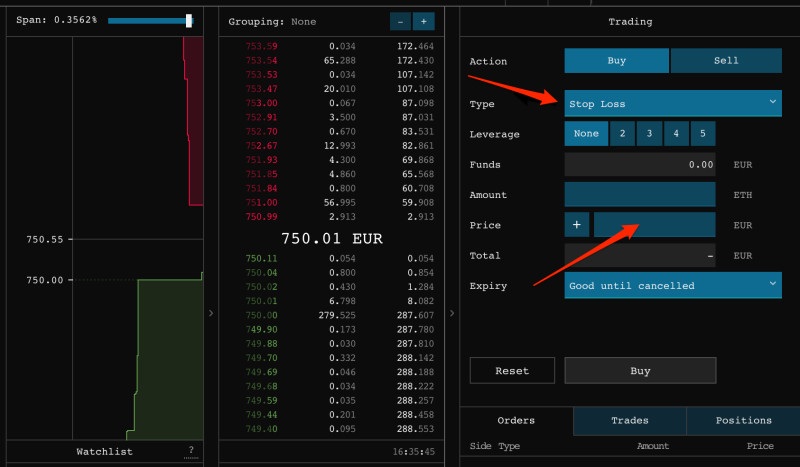
Crypto exchanges operate on similar mechanics but with different infrastructure. Kraken, for example, restored advanced order types after upgrading its trade engine. The two enabled types were Stop Loss and Take Profit. A Stop Loss sell triggers a market sell when a trade executes at or below your stop price. A Take Profit sell triggers at or above your target price. Both trigger from the traded price, not a displayed or calculated price. To create one, you select the type and enter the trigger price. Kraken also relisted ten previously delisted pairs including XRP/CAD, XRP/JPY, EOS/EUR, EOS/USD, XLM/EUR, XLM/USD, GNO/EUR, GNO/USD, REP/USD, and ZEC/JPY. The platform warns that crypto markets are high-risk, unpredictable, and you should be prepared to lose everything. Some products are unregulated with no government compensation schemes. Tax may apply on gains.
broker to trade cryptocurrency cryptocurrency exchange best lowest fees crypto exchangesIf you're evaluating a place to trade crypto , look at the same things: spread or fee structure, execution speed, available pairs, and whether advanced order types actually work when markets move fast.
Exchange Rates and Purchasing Power
Exchange rates work like a balanced seesaw. A stronger domestic currency increases purchasing power abroad; a weaker one reduces it. Small rate shifts can have outsized effects across an economy. Government policy influences this - Japan historically maintained a low yen to support exports and tourism. When the dollar strengthened 15% against the yen and euro over six months, American travel to Europe and Japan became cheaper, boosting those economies. But the stronger dollar also made the US more expensive for foreign visitors - a 10% appreciation correlated with a 2% annual decline in international visitors, potentially costing US tourism up to $200 billion. A weaker currency benefits tourist destinations at the expense of the stronger currency's purchasing power. Foreign visitors spent a record ¥2.03 trillion in Japan in 2014, up 43% year over year. Rates and tourism are tightly linked: a strengthening currency makes its country more attractive to outbound travelers; a weakening currency makes its country more affordable to inbound visitors.
Real World Currency Risk in Investment Returns
A forum discussion from 2024 walked through simple calculations showing how a strong Swiss franc affected foreign investments over 20 years. The math isn't a comprehensive simulation - it's a reference point. One commenter noted that if a currency depreciates by half, the foreign stocks need to double just to break even in home-currency terms. Another asked whether dividends were included; omitting them skews comparisons. The SMI (Swiss Market Index) was compared to the Nasdaq 100, but commenters argued the S&P 500 or total-market indices would be more appropriate. The core question: which country's index performed better after conversion into a common currency? One commenter pointed out that stock prices and local living costs don't move together - rents can rise while tech shares fall, making real estate a different kind of hedge. Another cautioned that comparing different national indexes introduces different return patterns, making it hard to isolate the currency effect. A cleaner comparison would use the same underlying index hedged vs. unhedged. Historical results from a low-rate period may not hold. The denomination of an asset doesn't automatically determine its currency exposure - a company's revenues, costs, debt, and contracts matter more. Companies often hedge their own exposures. Bonds are easier to analyze than stocks for currency purposes. The original article aimed at readers who might not grasp why the S&P 500 could rise 20% while the SMI rose only 5%, or why CHF savings rates trail EUR and USD rates.
should i invest in stocks or crypto stocks cryptocurrency venture capital companiesThe discussion also touched on whether currency risk should be measured by the asset's denomination or the company's actual exposure. One view: the euro denomination of a US Treasury bond ETF traded on XETRA shouldn't trigger a hedge. Companies have wages, contracts, and debt in specific currencies and may hedge those themselves. Currency relationships can be positive, negative, or delayed - they need asset-by-asset analysis. Geographic diversification still has merit, but currency hedging requires separate study. The strength of a home currency can work against foreign holdings, and withholding tax can add another edge for domestic investments.
Putting the Pieces Together
Trading in currency exchange isn't one thing - it's a set of connected decisions. You read a pair, you measure moves in pips, you pay a spread or fee, you decide whether to lock a rate forward or hold multiple currencies, and you weigh hedging against the cost and complexity. For businesses, it's about predictable cash flow. For investors, it's about isolating the return you actually want. The tools exist - forward contracts, multi-currency accounts, hedged funds - but each adds its own cost and operational weight. The right mix depends on your volume, your predictability, and how much uncertainty you're willing to carry. I've seen too many people treat currency as an afterthought and get surprised by a 1,200-pip move that wipes out a margin. Don't let that be you.
Whether you're paying suppliers, receiving export revenue, or building an international portfolio, the mechanics are the same. Learn the terms. Calculate the costs. Pick the tools that match your actual exposure. And remember - every provider quotes a little differently, so shop the total cost, not just the headline rate.



Comments on “A Simple Guide to Trading in Currency Exchange and Managing Risk”
No comments yet. Be the first to share your thoughts.