
Crypto Exchange and Wallet: How They Differ and Why Having Both Keeps Funds Safe
What Is a Crypto Exchange and Wallet
Hey. If you are in crypto, you, probably, already faced the two main tools: the crypto exchange and wallet. These are the two pillars of your crypto life. One lets you trade easy, the other keeps funds safe. I constantly return to this split because it matters so much for new folks. A cryptocurrency exchange is an online spot where you buy, sell, and swap coins. A cryptocurrency wallet is a digital tool that stores your private keys and lets you send or receive coins.
To define wallets in the simplest way, they do not actually hold the coins. The coins live on the blockchain. The wallet holds the secret codes, called private keys, that prove the coins belong to you. If you lose those keys, you lose the money. That is why a wallet is about control, not just storage. The exchange, on the other hand, is about moving money in and out of coins.
Both tools serve vital functions but they have distinct purposes. You cannot trade without an exchange, and you cannot truly own coins without a wallet. Many folks leave everything on the exchange because it feels easy. But that means the exchange holds your keys. To me, it’s like leaving your gold in a stranger’s vault. So learning the difference is the first step to stay in control.
How a Crypto Exchange Works
A crypto exchange acts as a middleman. It connects buyers and sellers and takes a small fee for the service. There are two broad types. Centralized exchanges like Coinbase and Binance are run by a single company. They oversee trades, hold user funds, and provide support. Decentralized exchanges, or DEXs, like Uniswap and SushiSwap, have no central boss. They let people trade directly from their own wallets.
Two main exchange types
- Centralized like Coinbase, Binance, run by a company
- Decentralized like Uniswap, SushiSwap, peer-to-peer
- Some platforms like Robinhood block real withdraw
- Look for KYC, fees, and coin support before signup
To start on an exchange, you create an account, pass a Know-Your-Customer check, and link a bank or card. After that you can deposit cash or coins, make trades, and withdraw. The process is close to opening a brokerage account. Some platforms are smooth, some are not. My advice: read reviews before you pick.
If you ever wonder where can you buy ripple cryptocurrency , the answer is a centralized or decentralized exchange that lists it. Most big exchanges support many coins, but not all support every small token. Check the list before signup. That saves you a headache later.
One thing to watch: some so-called exchanges like Robinhood do not let you withdraw the real coin. You see a balance, but you can't move it to your own wallet. That is more like a bet on price than true ownership. The source notes this is exchange-specific, not a knock on all exchanges. But you should know what you hold.
Types of Crypto Wallets
Now let's break down wallets. A crypto hot wallet is any wallet connected to the internet. It might be an app on your phone or software on your laptop. The upside is speed. The downside is hack risk. A cold wallet stays offline. Hardware devices such as Ledger and Trezor are cold. They look like USB sticks and keep keys inside.
Common wallet types
- Hardware wallets like Ledger and Trezor, offline cold
- Software wallets like Exodus, hot and connected
- Paper wallets with printed keys, rare now
- Exchange wallets which are hot by default
You might need a secure hot wallet for daily small trades. Names like Exodus, Wasabi, Electrum, and Mycelium are common. They are software wallets, which means they are hot by nature. Use them for amounts you can afford to lose. For savings, cold is the way.
To create a crypto wallet of the hardware type, you buy a device, plug it in, and follow setup. It will show you a recovery phrase of 12 to 24 random words. Write those words on paper. Never save them in a photo or file. That phrase is the master backup. If the device breaks, you buy a new one and enter the words.
When somebody sends you crypto, you give them your public address. Think of it as a bank account number for coins. It is essential to check the address is correct because blockchain sends are final. A typo means lost funds. I always copy-paste and verify the first and last few chars.
Why You Need Both Tools
Crypto exchange and wallet are a pair, not rivals. The best crypto wallet and exchange setup for a person is one that lets them trade when needed and store safe when not. Exchange is for buying, selling, swapping. Wallet is for guarding keys. You can't have one do both jobs well.
Source advice is clear: store long-term holdings in a secure wallet, ideally hardware. Use exchanges for trading and converting as needed. I follow this. I keep a small balance on an exchange for quick moves, and the rest on a cold device. That way a hack on the exchange stings but does not sink me.
When you search online, you, probably, see a phrase like vanguard crypto wallet or other brand names. I'm not saying avoid them, but check if they are non-custodial and have real reviews. Stick to known makers for cold storage. The flashy name does not matter as much as who holds the keys.
Risks of Storing Coins on an Exchange
Leaving crypto on an exchange carries real risks. First, the exchange can be hacked. Some have strong security and keep most funds in cold storage, but none are perfect. Past hacks have taken hundreds of millions in total. Second, the exchange could shut down. The case of Turkish exchange Thodex is a stark example: the founder allegedly fled with user funds. That is a nightmare.
Third, you may not truly own your private keys. If the platform blocks withdraw, you are stuck. Fourth, and I think biggest, your account can be compromised. Malware can steal logins. SIM swap scams let thieves take your phone number and reset passwords. The source suggests using an independent two-factor app like Google Authenticator instead of text codes. Hey, don't skip this part: turn on app-based 2FA.
Some exchanges carry insurance, but coverage varies and may not cover all loss. So vet the platform before you deposit hard-earned cash. Sure, you might look for crypto wallet low fees on exchange wallets, but cheap does not mean safe. Balance cost with track record.
Benefits of Cold and Hardware Wallets
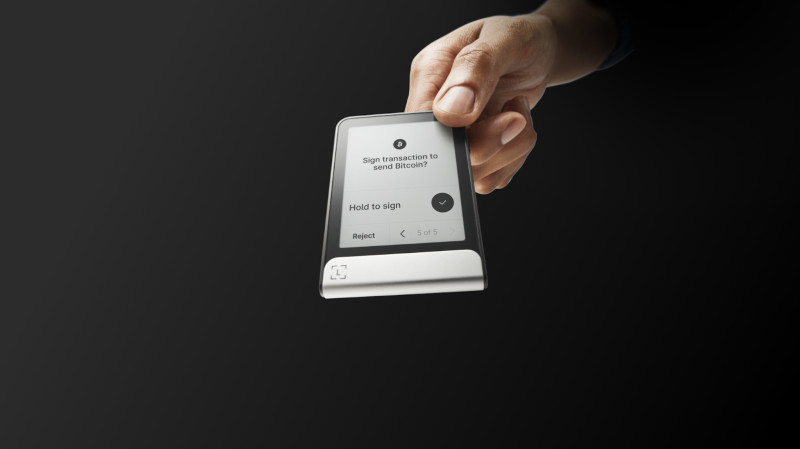
From a security standpoint, a cold wallet beats an exchange. If your coins sit on a Ledger or Trezor, a hacker needs the physical device plus your pin. The pin can be up to 8 chars. Devices are tamper proof. Even if the company gets hacked, your key stays on your device, not their server. You know without doubt you own the coin.
“I bought 2 with my initial order. Set one up to use and put the other one in locked storage. I wanted backup plan in case of total failure.” - Trezor Reddit user
Your recovery phrase is the lifeboat. Write it clear, store safe. Never share. A crypto wallet download for software should come from the official site only, not a random link. Bad downloads can steal keys. I double-check the web address before clicking.

The Ledger Nano S and Trezor Model One are good for beginners. Both easy to use. If you lose the device, the phrase brings back access. This is why I tell friends: the phrase is more valuable than the device. Guard it like cash.
Why a Second Hardware Wallet Helps
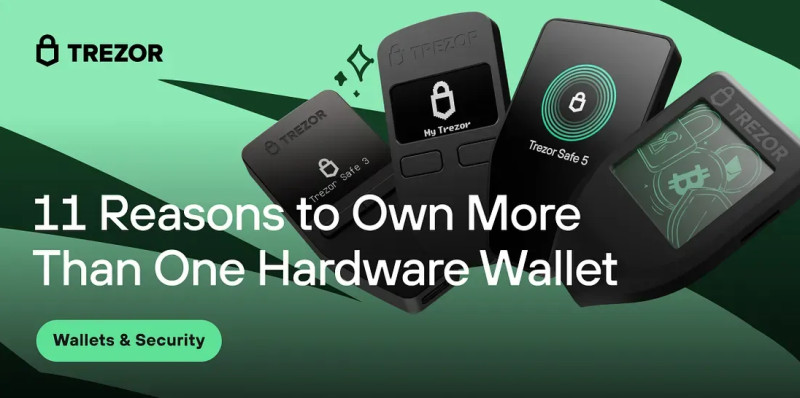
One wallet is enough to protect assets, but owning a second device can give extra security, flexibility, and peace of mind. The source lists 11 reasons. I'll lay them out so you see the range. It is not just for paranoid folks; many make sense.
Reasons to own more than one hardware wallet
- Extra backup for peace of mind if device lost, stolen, or eaten by pet
- Gifting to friends and family to start self-custody journey
- Bitcoin-only device to separate BTC from other coins
- Trading wallet kept handy, long-term wallet hidden safe
- Split funds across devices to reduce single point of failure
- Inheritance plan so trusted family can access if something happens
- Business funds separate from personal for clear accounting
- Travel wallet with limited funds while main stays home
- Fun collecting latest hardware wallet tech
- Teaching demos at meetups or workshops
- Multisig advanced setup requiring multiple devices to sign
Warning: Multisig is not beginner-friendly. If set up incorrectly, you could permanently lose access to your funds. Proceed with caution!
More wallets mean more responsibility. You must track devices and backups. If new, start with one primary and one backup. That is simple and solid.
DeFi Lending Risks Shown by a Hack
A major DeFi hack showed how lending platforms can break. Criminals exploited a weak validation in a restaking protocol to mint fake tokens. They pledged those as collateral on lending platforms and borrowed real ETH. The big platform Aave saw mass withdrawals as lenders feared loss. This highlights three risks: bad third-party data, weak insurance fund, and mixers hiding trails.
When the run started, lenders could not pull funds because liquidity dried. Stablecoin lenders pulled billions as fear spread. Interest rates on DeFi platforms spiked near 10 percent. Similar spikes happened in past events: in October 2021 Cream Finance lost $130 million, and in July 2023 Curve Finance hack caused rate jumps. The pattern is clear: panic spreads fast.
“The run extended beyond ETH lenders to lenders of other crypto assets, too.”
The takeaway for a normal user: keep your own keys offline. DeFi can be neat but it can freeze like a bank on a bad day. I would not park life savings in a lending pool.
Nonprofits and Crypto Donations
Many nonprofits now accept crypto. They use a donation tool or exchange to create a crypto wallet that auto converts coins to cash. The average crypto gift is large, around ten thousand dollars, vs about one hundred twenty for cash online. That is a big new stream.
For a charity, the best wallet to use for cryptocurrency is often a custodial wallet from Coinbase or Gemini. It links to their bank and sells quick. They must convert at once because price swings can hurt. The source says convert immediately to secure USD value.
Donors like the tax perks. They avoid capital gains and deduct full value. Younger tech-savvy people make up much of crypto users. So accepting coins opens a new donor base. But charities must set clear policy and teach staff.
Checklist for accepting crypto donations
- Crypto wallet to receive funds via public key
- Crypto donation tool for auto convert
- Updated gift acceptance policy
- Educational resources for staff and donors
- Marketing plan to promote option
Steps to Accept Crypto Donations
How a nonprofit can accept crypto
- Choose a crypto donation platform that opens wallet and converts to cash
- Add crypto option to website donation and ways-to-give pages
- Set policy: liquidate fast, issue tax receipts, handle anonymity
- Educate team on crypto basics and risks
- Promote cryptocurrency donations via email and social channels
The checklist includes a crypto wallet for receive, a donation tool, updated gift policy, staff resources, and marketing plan. The wallet's public key is what you share to get funds. As always, double-check the address. Blockchain means no take-backs.
Picking Wallet and Exchange Providers
Tangem makes only hardware and non-custodial software. It is not an exchange and does not hold your assets. Trezor offers models like Safe 7, Safe 5, Safe 3, and Keep Metal backup. Ledger offers Nano S and others. Centralized exchanges named include Coinbase, Binance, Robinhood, Gemini, and the defunct Thodex. DEXs include Uniswap, SushiSwap, and lending platforms Aave and KelpDAO.
If you want a crypto wallet download for hot use, get it from the maker's site. For cold, buy device direct. The best crypto wallet and exchange pair for me is a Ledger plus a big centralized exchange for trades. Simple and works.

Remember, a wallet from an exchange is a hot wallet by nature. It shares risks of any hot wallet. So don't treat exchange balance as fortress. Move savings out.
My Plain Advice to Stay in Control
Look, crypto can feel like a roller coaster. But the basic split is calm and clear: exchange to trade, wallet to store. Use cold wallet for savings. Use hot for small spend. Don't leave life savings on an exchange. I care about you not losing money to a hack.
Some want crypto wallet low fees but cheap isn't safe. Pay a bit for hardware. It's worth it. And if you see a vanguard crypto wallet ad, research before trust. The name means little if they hold your keys.
That's my notes on the crypto exchange and wallet pair. Keep keys offline, trade careful, and you'll stay in control. I'll keep learning and share more as I go.

Comments on “Crypto Exchange and Wallet: How They Differ and Why Having Both Keeps Funds Safe”
No comments yet. Be the first to share your thoughts.