
Understand Hydroponic NFT Systems, Compare Options, and Build One
Hydroponic NFT Systems: How They Work and What to Compare
I've been looking into hydroponic NFT systems for a while now. The Nutrient Film Technique uses a pump to move a thin film of nutrient-rich water over plant roots in sloped channels. It's a method developed by Dr. Allen Cooper in the 1960s that later spread to indoor gardens, greenhouses, and commercial crop production. The core idea is continuous circulation: a pump lifts solution from a reservoir, gravity carries it through channels, and a return line brings it back.
What makes NFT different from soil growing is that roots sit in net cups with their lower tips in the moving film while the upper root zone stays exposed to air. This gives plants simultaneous access to water, nutrients, and oxygen. The film is only about 2–3 mm thick. NFT systems reportedly use up to 90% less water than traditional soil agriculture because the solution recirculates and there's less loss from evaporation and drainage.
Root Zone Conditions and Oxygen
The thin film arrangement is meant to provide both moisture and aeration. Lower roots get water and nutrients from the moving film while upper roots get oxygen from the air. This creates an aerobic root environment. Continuous movement helps limit stagnant conditions and anaerobic bacterial growth. But there's a nuance here. Some sources say NFT provides maximum oxygen exposure, while others qualify that continuous flow provides some oxygenation but can be limited. Deep water culture can provide more explicit constant oxygenation when roots are fully submerged with air stones running. The degree of oxygenation depends on implementation, flow rate, reservoir conditions, root density, and whether the reservoir is separately aerated.
The moving solution also reduces salt buildup around roots since the film is continuously renewed rather than sitting static. Nutrients stay available and you can monitor and adjust through pH, electrical conductivity, temperature, and nutrient dosing. One overview describes NFT as reducing pest and disease pressure compared with media-based growing because roots aren't surrounded by soil. At the same time, recirculating NFT can spread pathogens rapidly when sanitation or flow is inadequate. These are different aspects of the same risk profile: soil-related problems may be reduced, but a shared nutrient loop can amplify waterborne disease if a problem isn't caught quickly.
The moving solution is also credited with reducing the accumulation of unused salts around the roots. Because the film is continuously renewed rather than remaining static around the root zone, nutrients remain available and the solution can be monitored and adjusted through pH, electrical conductivity, temperature, and nutrient dosing.
The NFT Circulation Cycle
The circulation cycle has three main stages. First, a pump draws nutrient solution from the main reservoir and sends it through tubing to the highest point of the growing channel or to a manifold serving several channels. Automated systems may monitor and adjust EC and pH during distribution. Second, channels are mounted at a slight slope. The solution travels from high end to low end as a shallow film. Roots absorb water and dissolved nutrients while the film passes along the lower channel surface. Flow must be sufficient to keep roots and channel surface wet without moving so quickly that contact and nutrient uptake are reduced. Third, solution reaching the end of a channel enters a return line and flows back to the reservoir. It may be reoxygenated before being pumped through again. This closed loop is the basis of NFT's water-conservation advantage.
Channels are generally only 1–3 inches deep. Their shallow construction reduces the volume of nutrient solution in contact with roots while leaving enough space for root development and drainage. Return capacity must match the pump and flow rate so solution doesn't accumulate at the lower end of a channel.
Core NFT System Components
Let me break down the main parts you need. Grow channels serve as the conduit for nutrient solution and the support structure for plants. Food-grade PVC pipe is common for small DIY systems - pipes around 3–4 inches in diameter modified with holes for net cups. Fiberglass and specialized commercial NFT troughs or trays are also used. Commercial channels may be made from UV-resistant plastic, described as lighter and more optimized with contours designed to distribute the film more evenly and reduce debris accumulation. Food-grade PVC is inexpensive and adaptable for small systems, while commercial troughs are selected when durability, standardized performance, and larger capacity are priorities.
Channel length affects nutrient distribution. Plants near the beginning of a channel can remove key nutrients before the solution reaches the far end. If the channel is too long, plants at the farthest end may receive lower nutrient concentration, resulting in uneven growth. Shorter channels or several shorter sections are used when a larger growing area must be served.
Common growing media for NFT net cups
- Rockwool cubes, which retain substantial water and are commonly used for seedlings
- Expanded clay pellets, which are lightweight and drain well
- Coconut coir, a renewable material with useful water-management properties
- Foam or compressed peat and coir plugs used during propagation
The reservoir stores and supplies the nutrient solution. It should be food-grade, large enough to buffer changes in temperature and nutrient concentration, and positioned below the channels. Black or opaque reservoirs are preferred because blocking light helps prevent algae growth. One build guide suggests a minimum of approximately 10 gallons for a small system. Another sizing method multiplies total channel length by 0.5–1 gallon per foot - so 100 feet of channel would need a 50–100 gallon reservoir. A larger reservoir provides greater thermal stability and more capacity to absorb changes in nutrient concentration.

Pump and Power Dependence
The pump is the system's continuous circulation source. It should be positioned inside the reservoir and remain fully submerged. Submersible pumps rated at approximately 250–400 gallons per hour are described as sufficient for many residential and small-business systems. The required pump capacity depends on the number and dimensions of channels and on the intended flow per channel.
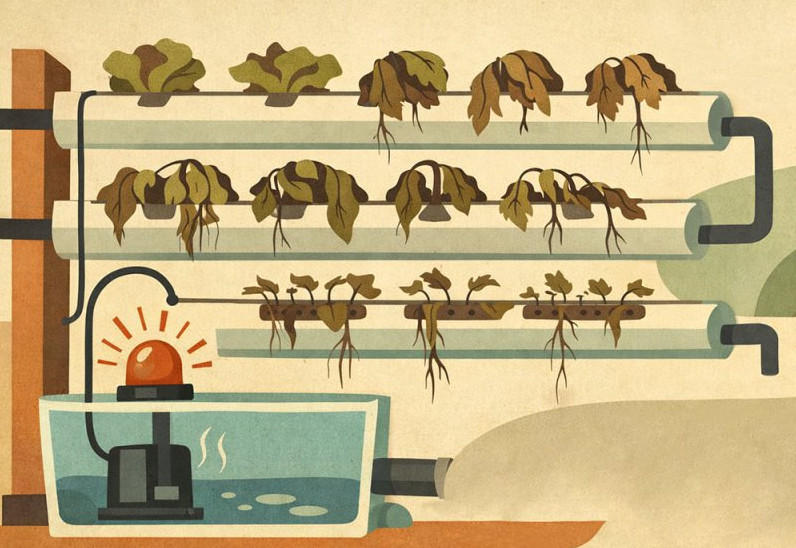
Here's the critical part: NFT has virtually no buffer compared with flood-and-drain systems. Ebb-and-flow trays retain solution between cycles, while NFT depends on uninterrupted movement. A pump failure, blocked drain, or power outage can disable the system within hours. For commercial operations, redundant pumps and battery-backed or other emergency power systems reduce the risk of crop loss. Hobby systems can also use a backup pump, a high-water or flow alarm, and power backup. I can't stress this enough - if you're building one of these, plan for pump failure from day one.
Published Design Ranges and Differences
The numerical design recommendations vary across sources, and they're not reconciled in the material I've seen. For channel slope, one description gives a 1:100 ratio. A detailed DIY build guide gives 1:30–1:40. Another section gives 1:30–1:10, while a later design section describes an industry-standard range of 1:30–1:100. A maintenance section separately calls for a minimum 2% slope in horizontal channels.
For flow, one design section gives 1–2 liters per minute per channel. A beginner-oriented passage suggests starting at 0.5 liters per minute. Other build and maintenance instructions use 3–5 gallons per hour per channel. Pump recommendations of 250–400 gallons per hour refer to the overall pump rating rather than a stated per-channel flow. The source material doesn't explain how these different flow conventions relate to one another.
For channel length, one DIY guide recommends approximately 10–12 feet so the far end doesn't receive insufficient nutrient supply. Another source recommends limiting channels to approximately 30–40 feet and using shorter channels in series for larger installations. The stated slope, flow, and length figures should be treated as separate published specifications rather than a single resolved set of dimensions.
The stated slope, flow, and length figures therefore should be treated as separate published specifications rather than a single resolved set of dimensions.
Plant Selection for NFT
NFT is most suitable for rapidly maturing plants with compact, shallow root systems. Lettuce is one of the most commonly suited NFT crops - butterhead, romaine, oakleaf, and multi-leaf varieties. Other leafy greens include spinach, kale, mustard greens, arugula, sorrel, tatsoi, mache, frisee, and bok choy. These crops have compact roots, quick harvests, and strong nutrient uptake in NFT channels.
Herbs also work well: basil, mint, cilantro, chives, parsley. The continuous nutrient supply is associated with rapid vegetative growth and strong flavor and aroma. Wheatgrass and microgreens can grow in shallow NFT channels, though specialized compact systems are often used instead of full-size channels. Standard NFT channels are not considered suitable for all large fruiting plants or root vegetables without modification. Tomatoes, peppers, cucumbers, strawberries, and root vegetables like turnips and carrots may require additional support, larger containers, or deeper root zones. Strawberries are described as being at the boundary of what a basic NFT system can grow.
Most conventional NFT systems aren't designed for direct seed germination because the thin film at the bottom of a channel doesn't provide enough moisture. Seeds are normally started in rockwool, foam, coir, or another propagation medium. Seedlings should be transferred when white roots visibly extend from the medium and can immediately contact the nutrient film. Lettuce plants are generally spaced about 6–8 inches apart according to mature size.
Operational Advantages
The reported advantages of NFT include water conservation (up to 90% less water use than soil), continuous nutrient delivery in a thin renewable film, oxygen exposure for the upper root zone, reduced nutrient-solution volume compared with systems that immerse more of the root zone, rapid growth from constant access to nutrients and oxygen, lower use of growing media, easy visual access to roots for inspection, scalability from home to commercial, ability to arrange channels horizontally or stack them vertically, lower fertilizer and water volumes when recirculation is managed correctly, and potentially high yields when channel length, flow, nutrient distribution, and crop density are properly controlled.
NFT channels can be installed horizontally in a greenhouse or stacked vertically in a controlled-environment facility. A single horizontal plane is inexpensive to build but not especially space-efficient. Vertical or stacked channels use the footprint more efficiently and can increase output per square foot. The closed recirculating loop also reduces nutrient solution discharged from the system, which helps protect groundwater from contamination while reducing resource use.
Key advantages at a glance
- Up to 90% less water than soil agriculture
- Continuous nutrient and oxygen delivery
- Low growing media requirements
- Easy root inspection and diagnosis
- Scalable from home to commercial
- Vertical stacking possible
- Reduced environmental discharge
Limitations and Failure Points
The main limitation is the lack of a reserve water supply. If the pump stops, the film stops moving and roots can dry within hours. A blocked drain, power failure, or pump failure can cause rapid wilting and total crop loss. Flow interruption is another issue - too low and roots don't get enough water and nutrients, too high and the solution moves too quickly for adequate contact. Turbulent flow can disturb the film, while slow flow can deprive roots and encourage settling or blockage.
A pump that's operating doesn't necessarily mean flow is adequate throughout the system. Each channel should be checked individually for steady film thickness, return drainage, and absence of standing water. Root and channel clogging is a real problem - as roots grow, they can mat together and obstruct the channel, drain, or return line. A blockage acts as a dam, causing solution to back up and depriving downstream roots of flow.
Nutrient distribution along long channels can leave the far end deficient. The resulting deficiency may not be obvious early in a crop cycle. Disease and sanitation is another major concern - the recirculating loop creates a shared failure point. A pathogen introduced into the solution can move through multiple channels and reach the entire crop. A 24-hour delay in noticing the beginning of a fungal disease is described as having caused massive plant loss in one consulted crop. Temperature sensitivity matters too - recirculating solution can become too warm or too cool, with higher temperatures reducing oxygen availability and favoring root disease.
Beginner Suitability and Scale
Guidance on this is divided. One presentation describes NFT as beginner-friendly because it uses few parts, has a simple operating concept, exposes roots for inspection, can be arranged vertically, and operates continuously without a timer or complex cycling. It's described as forgiving once installed and flowing correctly. Another source specifically argues that beginners and small-scale growers should avoid NFT at first. The reasoning: NFT requires simultaneous control of solution flow, channel air temperature, nutrient chemistry, sterilization, and several failure points. The time between a developing problem and its consequences can be short, so growers must recognize and correct problems quickly.
Small growers may be distracted by finances, distribution, employment, family responsibilities, or other crop tasks and may not have standard operating procedures or a contingency plan. That source recommends a more forgiving system for a first hydroponic attempt - deep water culture as an easier, more reliable way to avoid media, or open media-based systems with the best success rates and lower starting costs. Once a grower has mastered monitoring and a simpler system, NFT can be attempted with the expectation that initial results may be worse than those from the earlier method.
Large commercial operations can have staff assigned specifically to monitor crop performance, dedicated procedures, established turnkey systems, and experience with crop-specific problems. More than 70 years of commercial hydroponic experience is cited as supporting standardized management approaches for leafy greens, cucumbers, tomatoes, peppers, and strawberries. The operating scale changes the balance between NFT's efficiency and its monitoring requirements.
A well-supported commercial installation can use NFT's low media volume, water efficiency, and yield potential, while a small installation with limited monitoring may obtain more reliable results from DWC, media beds, or another forgiving method.
NFT Compared with Other Hydroponic Methods
Deep Water Culture suspends plant roots directly in an oxygenated nutrient solution with air stones or pumps supplying oxygen. DWC provides constant access to nutrients and oxygen and is relatively simple to assemble, often less expensive than NFT. It's widely used for lettuce, kale, spinach, herbs, and some small fruiting plants. But DWC has dependencies - if the air pump fails or provides insufficient aeration, roots suffer. Solution temperature must be managed because warm water holds less oxygen. Compared with NFT, DWC keeps more of the root mass submerged while NFT provides more direct exposure to air but depends on a moving film and reliable pump.
Flood and drain periodically floods a grow bed or tray then drains it back to a reservoir. A timer commonly controls the cycle. During the drain period, roots are exposed to air. It can be more forgiving of a short interruption than NFT because some solution remains in the tray. Benefits include versatility and suitability for a broad range of plants - tomatoes, peppers, cucumbers, herbs, mixed crops. Disadvantages include regular cleaning, clogging, algae growth, and dependence on timers and pumps.
The Kratky method is passive - a sealed container holds nutrient solution with an air gap above the liquid. No pump required. It's inexpensive to set up but requires a properly formulated solution and regular monitoring of liquid level. Best suited to small, fast-growing plants like lettuce and herbs. Wick systems use fibrous material to move solution upward by capillary action - few moving parts, quiet, inexpensive, easy to maintain, but slow nutrient delivery and poor suitability for thirsty or large crops.
Drip systems deliver solution through emitters near each plant base - highly adjustable, scalable, suitable for basil, tomatoes, peppers, and large or mixed crops. Aeroponics suspends roots in air and sprays them with nutrient solution - high-tech, high-control, supports fast growth and high yields, but nozzle clogging, unstable root-zone temperatures, constant monitoring, backup-power requirements, and higher equipment cost. Vertical tower and ZipGrow systems use vertical planes for three-dimensional growing. Media-based systems use aggregate or fiber medium inside containers, providing more root support for large-statured crops but requiring media handling, irrigation, drainage, and disposal or reuse.
Oxygen Delivery Across Systems
Oxygen is required for root respiration, nutrient uptake, and overall plant growth. Insufficient oxygen contributes to root rot, reduced nutrient absorption, and stunted growth. NFT: moving solution provides some oxygenation while exposed upper roots receive air. Flood and drain: roots receive oxygen during each drain period. DWC: air stones or pumps provide direct aeration. Kratky: roots use oxygen in the air gap above the solution. The comparison indicates NFT is not automatically the most oxygenated system in every implementation. Its oxygen exposure depends on channel design, film thickness, root density, flow, and reservoir aeration. DWC can provide more continuous aeration when its air pump operates correctly.
Choosing Among Hydroponic Systems
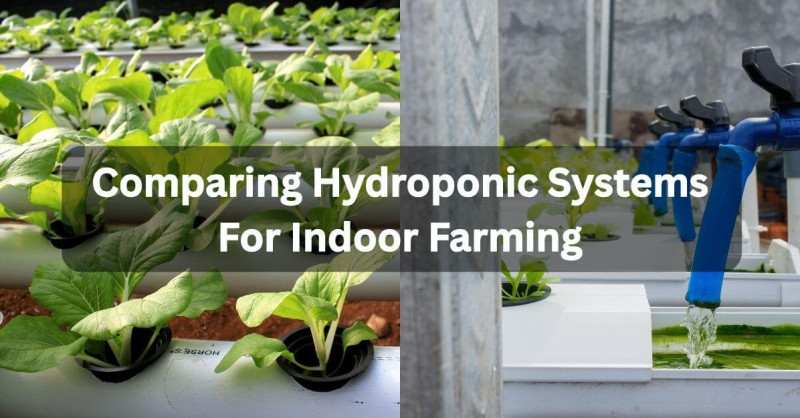
The best system depends on crop, space, budget, facility conditions, labor, and monitoring capacity. Here are some general setup cost estimates from an indoor farming comparison:
Estimated setup costs and maintenance levels
- Wick system: $30–$70, Low maintenance, Beginners and herbs
- Deep Water Culture: $50–$150, Low maintenance, Lettuce and kale
- NFT: $100–$300, Medium maintenance, Leafy greens
- Ebb and Flow: $120–$400, Medium to high maintenance, Mixed crops
- Drip system: $150–$500, Medium maintenance, Large or mixed crops
- Aeroponics: $400–$1,000+, High maintenance, Professional and technically experienced growers
These are general estimates - cost changes with reservoir size, channel length, pump capacity, monitoring equipment, commercial fittings, and facility construction. For leafy greens and herbs, NFT, DWC, and wick systems are suitable choices. For tomatoes, peppers, and other fruiting plants, drip and Ebb and Flow are more suitable because they provide support and greater control. NFT may be used with substantial structural modifications. Microgreens and specialty crops suit NFT and DWC. Large or heavy crops generally need media systems, drip, or well-supported Ebb and Flow configurations rather than unmodified NFT.
Space and scalability: wick and DWC are compact for shelves, closets, small rooms. NFT channels scale from home to commercial greenhouses and can be stacked vertically. Aeroponics scales but requires more technical equipment. Horizontal NFT is inexpensive but may use more floor area than vertical arrangements. Location affects sunlight angles, temperature consistency, humidity, and need for supplemental lighting. Facility layout determines whether a system must fit around pillars, small rooms, uneven floors, or temperature fluctuations. Commercial facilities may need separate drainage and irrigation elevations, automatic dosing, redundant pumps, and backup power.
Building an NFT System
Start by measuring available space and assessing light and temperature stability. A location receiving approximately 6–8 hours of sunlight is suitable, or supplemental lighting can be used. The layout should account for number and length of channels, space between channels (generally 8–12 inches), access for planting, inspecting roots, cleaning, harvesting, a working height for comfortable maintenance, reservoir location below channels, access to power and drainage, and supplemental lighting if natural light is insufficient. Sketch the design before cutting pipe or drilling holes. Confirm the reservoir, pump, manifold, channels, and return lines will fit without creating high points where water can collect.
The frame must hold water-filled channels and mature plants. Square metal tubing, PVC, and sturdy wood are possible materials. The frame should place the reservoir at the lowest point, remain level from side to side, allow channels to slope along their length, reinforce joints and load points, and prevent sagging as channels fill with water.
Secure channels to the support structure with pipe clamps or similar fasteners. The detailed DIY guide uses a slope of approximately 1:30–1:40. The selected slope should allow a thin film to travel without pooling or moving so quickly that roots lose contact. If the installation requires several channels, divide them into shorter sections rather than relying on a small number of very long channels. Verify every channel has an even grade and the outlet at the lower end is positioned over the return collection system.
Place the reservoir below the lowest end of the channel network. Put the submersible pump inside the reservoir and connect it to the highest point of the first channel with flexible tubing. For multiple channels, construct a manifold that distributes flow evenly. Check each branch for leaks and confirm every channel receives intended flow. The return line must carry combined drainage back to the reservoir without backing up.
Drill or cut openings for net cups and insert them securely. Start seedlings in rockwool cubes or another suitable propagation medium. Transfer them after roots extend visibly from the medium and can reach the nutrient film at the bottom of the channel. Position seedlings so root tips make immediate contact with nutrient solution while upper root area remains exposed to air. Space lettuce plants according to mature size, generally around 6–8 inches apart.
Testing the System
Test before adding a permanent crop. Fill the reservoir with water, start the pump, and check every channel. Inspect all tubing, bulkheads, joints, and connections for leaks. Confirm solution reaches the far end of every channel. Check that each channel returns solution to the reservoir. Adjust pump output or slope if the film is too thick, too thin, uneven, or absent in part of a channel. After the water test passes, add the nutrient solution required by the crop. Measure pH and EC and confirm solution temperature is within the appropriate range. A system should be checked again after several hours because leaks or partial clogs may not be visible during a short initial test.
A Simple Recirculating Hydroponic Rail Design
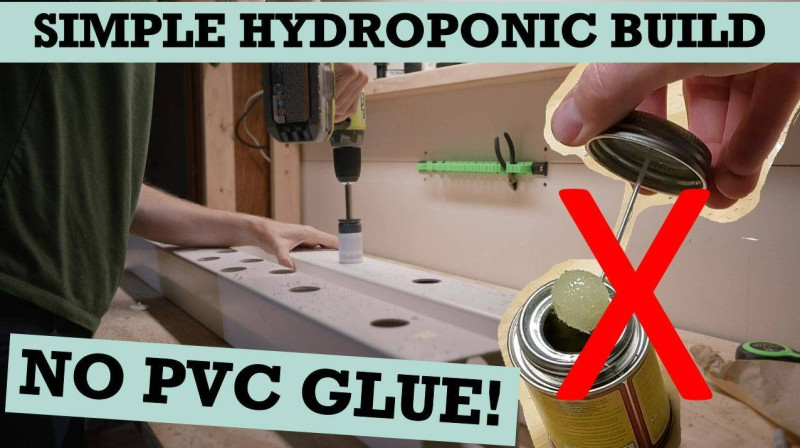
There's a separate DIY rail design using two horizontal rails made from a 4-inch fence post. It can be assembled in less than two hours and doesn't require PVC glue. The pump sends nutrient solution into the first rail and out through the second, creating a loop. Additional rails can be added to increase capacity. The rail system uses seed plugs placed in net cups. The first rail is set at a water level high enough to keep the plugs moist, allowing plants to grow from seed to harvest in the same setup. It's intended primarily for leafy greens and herbs, but strawberries and dwarf tomatoes can also be grown. Large plants require more root space and vertical support.
The rail design is related to NFT because it recirculates nutrient solution through a plant-supporting channel, but it maintains a higher water level for seed-plug moisture than the conventional NFT root-tip arrangement. Construction involves cutting a 4-inch fence post in half to form two rails approximately 4 feet long, drilling connection holes at inner ends for inlet, outlet, and connections between rails, drilling 1.5-inch planting holes along the top of each rail spaced according to plant size, sanding sharp edges, installing bulkhead fittings in connection holes (they tighten without glue and can be disassembled for cleaning), threading elbows into inlet and outlet fittings, connecting adjacent rails with a threaded riser, attaching end caps with aquarium silicone and allowing it to cure, then placing the system under a grow light and monitoring water level, flow, root growth, and moisture of seed plugs. The described setup produced a full crop of lettuce within several weeks.
Nutrient, pH, EC, Temperature, and Oxygen Monitoring
Accurate measurement is essential because NFT has little reserve capacity and recirculation can change nutrient concentration over time. Most plants perform best within an overall pH range of approximately 5.5–6.5, with another monitoring range given for many plants at 5.5–6.2. The appropriate target depends on crop and growth stage. pH should be monitored at least twice weekly and more often when plants show stress, nutrient availability changes, or the reservoir receives a large addition of water or fertilizer. A reliable pH meter or inline pH sensor allows correction before pH drift contributes to nutrient lock-up or deficiency symptoms.
Electrical conductivity (EC) measures dissolved material concentration in the solution. The commonly stated target is approximately 1.0–2.0 mS/cm depending on plant species and growth stage. EC drift can indicate nutrient depletion, excessive concentration, dilution problems, or a change in solution balance. A rising EC indicates increasing concentration. EC should be measured at least twice weekly in NFT maintenance guidance, while general indoor guidance recommends daily monitoring.
Most plants prefer nutrient-solution temperatures between approximately 65–75°F (18–24°C). Temperatures above 75°F are associated with reduced oxygen availability and increased risk of root disease. A temperature sensor should be placed in the reservoir or another representative location. In warm climates, temperature control, aeration, shading, reservoir insulation, or active cooling may be necessary. Advanced operations may monitor dissolved oxygen in the root zone - adequate dissolved oxygen supports root development and helps inhibit anaerobic pathogens. A normal target for advanced NFT monitoring is approximately 6–8 mg/L.
Maintenance Schedule
Daily inspection covers flow at the beginning, middle, and end of each channel, return flow and reservoir level, nutrient-solution temperature, plant stress signs, visible blockages or leaks, pump noise and operation, and root tips and channel film thickness. NFT doesn't provide a long interruption buffer, so daily observation identifies failures before roots lose access to water.
Twice weekly: measure pH, EC, nutrient-solution temperature, flow conditions, and reservoir level. Adjust pH, nutrient concentration, water volume, or pump output based on measurements and crop requirements.
Weekly: clean or inspect channel walls, debris and dead plant material, return drains and gutters, root mats, mineral deposits, tubing connections, potential leak points, and reservoir edges and pipe junctions. During growing season, a weekly system inspection is recommended. Root trimming may be necessary when roots begin to obstruct drainage or flow.
Monthly: calibrate pH and EC sensors using approved standards. Keep pH sensors in appropriate storage solution between uses to preserve electrode condition and measurement accuracy.
Annually or twice yearly: one schedule calls for annual sensor reference checks, battery replacement, and complete system sanitation. Another calls for complete sanitization twice yearly. The common purpose is to remove pathogens, mineral deposits, and residues from earlier crops.
Maintenance frequency summary
- Daily: flow, temperature, plant health, leaks, pump operation
- Twice weekly: pH, EC, temperature, flow, reservoir level
- Weekly: channel cleaning, debris, root mats, mineral deposits, connections, leaks
- Monthly: sensor calibration
- Annually or twice yearly: full system sanitation
Algae, Root Clogs, Leaks, and Pump Failures
Algae grow when light reaches nutrient-rich water. Opaque reservoirs, opaque channels, and covered nutrient containers reduce light exposure. Regular removal of plant debris and routine channel scrubbing also reduce conditions supporting algae. For persistent algae problems, one source gives a treatment of 3 ml of a 3% hydrogen peroxide solution per gallon - this is a source-specific quantity and should be interpreted only as the stated maintenance instruction, not as a substitute for checking product labels and safe handling procedures.
Root clogs: roots can grow into one another and obstruct the channel or drain. Preventive measures include matching plant size to channel dimensions, avoiding excessive plant density, inspecting root growth, trimming roots when they begin to interfere with flow, removing debris before it forms a dam, scrubbing channels during crop rotations, and confirming every channel drains evenly. A root clog can stop flow in one section even while the pump continues to operate elsewhere.
Leaks may occur at pipe joints, bulkhead fittings, channel connections, reservoir edges, or places where roots have obstructed a drain. Basic leak-repair sequence: identify the source, seal it with a sealant identified as safe for water contact, allow sealant to dry for 24 hours, refill or restart and inspect the repair. Weekly inspections during growing season catch small leaks before nutrient loss or flow interruption damages the crop.
Pump failure removes the system's nutrient and oxygen delivery within hours. A backup pump, backup power, redundant circulation equipment, and an alarm can reduce risk. Commercial systems may use separate pumps for different channel groups so one failure doesn't disable the entire crop. Power backup should be checked before it's needed - a backup pump that's not connected, has a depleted battery, or is blocked by debris doesn't provide protection.
Equipment and Other Considerations
General indoor-hydroponic equipment includes full-spectrum LED grow lights, HPS or CMH lighting for some larger or commercial installations with additional heat management, hydroponic nutrient formulas, reliable pH and EC meters, water pumps and air pumps, timers and controllers, reservoirs, channels, net cups, and return lines, temperature and dissolved-oxygen sensors, filters for drip and nutrient systems, backup power and alarm systems. Full-spectrum LEDs are described as suitable for indoor hydroponics because they can provide wavelengths for multiple growth stages while producing less heat than some older lighting systems.
Tap water can be used in some hydroponic systems but should be tested first - chlorine, chloramine, and high concentrations of calcium, iron, or other minerals can interfere with nutrient uptake or alter the solution. Reverse-osmosis or distilled water is considered when existing water has high mineral content. High humidity and stagnant air can encourage fungus gnats, spider mites, algae, and mold even though soil-related problems are reduced. Air circulation, humidity monitoring, regular cleaning, and appropriate pest-control measures limit these problems.
A complete solution change is generally scheduled every one to two weeks in indoor systems, though plant uptake and system size alter the interval. pH and EC should be monitored daily when possible. Cloudy or smelly solution indicates it should be refreshed even if the scheduled interval hasn't been reached. Timers, sensors, dosing pumps, pH controllers, lighting controls, irrigation controllers, and remote monitoring systems can automate parts of hydroponic operation. Automation reduces hands-on maintenance and helps identify changes in pH, EC, temperature, water level, or flow. It doesn't eliminate the need to select the correct crop, inspect roots, maintain channels, clean equipment, or respond to failures.
Common System-Selection Mistakes
Common mistakes in choosing a hydroponic system include ignoring plant compatibility, choosing a system that doesn't provide enough root space or support, underestimating equipment required for monitoring and control, using a weak pump or unreliable lighting, failing to plan for maintenance, forgetting that pumps, emitters, timers, and reservoirs can clog or fail, treating a passive system as suitable for large or fast-growing plants, selecting NFT solely for its water efficiency without accounting for pump failure and monitoring requirements, and using a horizontal layout when vertical space, lighting, or access requires a different arrangement.
Selecting NFT solely for its water efficiency without accounting for pump failure and monitoring requirements is a common mistake that leads to crop loss.
When I first started researching this, I kept thinking about how different investment strategies have similar trade-offs - like how putting money into crypto requires monitoring and risk tolerance, or how staking tokens locks up capital for yields. The parallel isn't perfect but it's there: both need you to understand the failure modes before you commit. Same with holding in DeFi - you're exposed to smart contract risk just like NFT roots are exposed to pump failure. And just like people ask whether to pick stocks or crypto , growers weigh NFT against DWC or drip systems based on their risk tolerance and time. Even VC firms do due diligence on failure modes before writing checks - same principle applies here.



Comments on “Understand Hydroponic NFT Systems, Compare Options, and Build One”
No comments yet. Be the first to share your thoughts.