
How Bit Coin Mining Rigs Work and What to Check Before You Build
How Bit Coin Mining Rigs Work and What to Check Before You Build
Thinking about bit coin mining rigs ? I like to think of a rig as a computer with one narrow job: run hash work for a chosen coin and send any reward to a wallet. The boxes are only half the story. Power, cooling, network access, the operating system, mining software, monitoring, and payout setup all have to work together. If you are asking what cryptocurrency mining is , that is the short answer. I’ll walk through the parts, the hash search, a hand test, a repeatable setup, and the numbers worth checking.
What Goes Inside a Bitcoin Mining Rig
A mining rig can be a normal computer in a case, or it can be an open frame loaded with mining parts. The mining community calls both a “rig.” A GPU rig shares a motherboard, memory, storage, power supply, and network connection across several graphics cards.
Common rig parts
- A motherboard with room for the needed cards
- RAM for the operating system and mining software
- An SSD, hard drive, or boot USB for the system
- GPUs, a CPU, an ASIC, or another mining device
- A power supply with enough power and the right connectors
- Networking, cooling, and temperature monitoring

An open frame can cut cost because it drops the case and some extra protection. You also lose dust protection, physical security, and part of the cooling design. And the work does not stay tiny. The source said maintenance gets hard at about five rigs, because every update, cable, fan, and failed drive can become another job.
GPU, CPU, ASIC, and FPGA Choices
There is no fixed best crypto to mine for every setup. The coin’s algorithm has to match the hardware. GPUs can be useful when an algorithm is built for graphics work, while an ASIC does one job with much less waste. Bitcoin mining, for example, is tied to SHA-256, which ASIC chips handle well.
Main kinds of mining hardware
- GPU: Uses groups of graphics cards and gives room to tune cards and memory clocks.
- CPU: Uses processors and can work without a GPU, though many coins favor other hardware.
- ASIC: A chip made for one mining task. Bitcoin ASICs are built around repeated SHA-256 work.
- FPGA or accelerator: Uses configurable or special hardware, but setup and driver support depend on the product.
A 2017 Ethereum guide in the source said Bitcoin ASICs had far more hash power than GPU machines and had taken over GPU mining for several coins. That does not make a GPU bad. It means you should match the device to the coin before buying parts.
Power, Cooling, and Physical Layout
Mining turns a lot of power into heat. Mining software can lower the workload and raise fan speed as temperatures climb, but the rig still needs air moving through it. Each GPU needs its own temperature check so you can lower its load or shut it down before it gets hurt.
Checks for a sound rig layout
- Give the power supply spare power rather than running it at its limit
- Keep high-power circuits separate when the site allows it
- Move cool air toward the cards and hot air away from them
- Watch each GPU instead of relying on one case reading
- Keep dust out and leave room to inspect cables and fans
- Plan how the rig will be shut down if one card fails
Heat is part of the design, not an extra.
A full data center may add air conditioning, ventilation, networking gear, and dust-free rooms. An open frame costs less, but then cooling and physical care become your job. Don’t skip this part just because the computer still turns on.
How Bitcoin Mining Works
How crypto mining works is easier to understand as a giant number guess. Miners collect Bitcoin transactions, place them in a candidate block, and hash the block data. A valid result must fall below the target set by Bitcoin’s network. Most guesses fail, so the miner changes the nonce and tries again.
The mining loop
- Collect pending Bitcoin transactions
- Build a candidate block
- Run the block data through SHA-256 twice
- Compare the result with the network target
- Change the nonce when the result is too high
- Broadcast a successful block for network acceptance
A fast result is not enough. It must be shared fast, accepted by most nodes, and followed by new blocks.
This work helps guard the shared Bitcoin ledger and prevents the same coins from being spent twice. A new block arrives about every ten minutes, but that is not a promise that one miner will earn a coin. A miner with a large share of the network’s hash power still does not act alone, since other nodes have to accept and build on the result.
SHA-256 by Hand
SHA-256 is the hash operation at the heart of Bitcoin mining. It takes a 512-bit input block, which is 64 bytes, mixes the data, and makes a 256-bit output, which is 32 bytes. The round is simple enough for digital logic and is repeated 64 times. Each round works with values A through H using bit choices, rotations, additions, and fixed constants.
What happens inside SHA-256
- The input block is divided into 32-bit values
- Eight working values are held in A through H
- Bit functions choose and mix parts of those values
- Rotations and 32-bit additions make new values
- Round constants come from roots of the first primes
- The final 32-byte value becomes the hash
Ken Shirriff performed SHA-256 by hand to show what miners are actually doing. His first round took 16 minutes and 45 seconds. Repeating a Bitcoin mining calculation usually needs 128 rounds because the first 512-bit result can be reused while the nonce changes. At his hand-work rate, the full job was about 1.49 days and produced 0.67 hashes per day. A machine built for SHA-256 can do terahashes per second, which is about a quintillion times faster.
What Manual Hashing Teaches You
The hand test does not make a practical miner, but it clears up a lot of fog. It shows that cryptocurrency mining is repeated guesswork, not a normal calculation with one clean answer. The hardware simply carries out the same steps at a speed a person cannot match.
What the paper test makes clear
- A block hash changes when block data changes
- The nonce gives the miner a new value to test
- Most hashes miss the target
- A result must be sent to the network quickly
- Speed matters only when the software and network work too
The source compared hand hashing with mining hardware and found an enormous power gap. A reader then pointed out that the test counted resting energy the body would use anyway, while muscle work may have caused much of the extra cost. So the paper example is great for learning, but it is not a fair home energy budget.
Paper and pencil can explain the process. They cannot compete with a chip.
Linux, Windows, and a Repeatable Rig Setup
One documented setup used Linux with the EthOS mining distribution. Windows was the other stated choice, though the Puppet setup had weaker support there. macOS and Docker were not part of that particular mining image, so this was not a universal rule about every computer.
Repeatable setup used in the source
- Write the Linux mining image to a small SSD or USB device
- Boot the rig in a live, replaceable setup
- Pull the needed Puppet modules from Git
- Run puppet apply with the site.pp file
- Let the run install services and apply the mining setup
- Repeat the same image and settings on each machine
Treat the operating system as part of the rig, not as a one-time setup job.
A search for how to cryptocurrency mine often skips this boring part, but it should not. Replacing a failed drive becomes much easier when every machine boots from the same base image. The owner does not have to preserve a unique setup on each rig.
Mining Software Features That Matter
Mining software tells the hardware what job to run, where to send work, and where to send rewards. A search for cryptocurrency mining setup often turns into a long list of programs. The real choice is much simpler: find one that supports your hardware, coin, operating system, wallet, and pool.
Software checks before downloading
- Does it support the exact GPU, ASIC, or algorithm in the rig?
- Does it run on the chosen operating system?
- Can it report accepted hashrate, temperature, and errors?
- What developer or platform fee is taken?
- Can it switch coins or mining profiles when needed?
- Does the team document pool and wallet setup?

The source review described CudoMiner with coin switching, Kryptex as a background Windows miner, Awesome Miner with profit switching, BFGMiner as a power-packed but harder tool, and Multi Miner as easy hardware detection without automatic profit selection. Treat those as examples of feature types, not endorsements. A program can look neat and still lose money if its fees, power draw, or hardware support do not fit your rig.
GPU Mixing, Drivers, and Card Profiles
Mixed GPU rigs need more care than the parts list suggests. In the captured SimpleMining discussion, “mixed” meant different GPU models, not just AMD beside NVIDIA. An RTX 3070 paired with an RTX 2060 Super or RTX 1080 Ti caused fan-control trouble, and removing the second model fixed it.
Checks for mixed card rigs
- Test each GPU model before filling every slot
- Match the operating-system image to the card family
- Do not use a Radeon VII image on unrelated GPUs without testing
- Save clock, voltage, fan, and memory settings per card model
- Expect some memory temperature data to be missing by card or driver
- Check BIOS and driver support for large memory and old accelerators
- Treat thermal pad changes as model-specific repair work
The source also showed why one global overclock setting is risky. Different vendors and models can need different limits even when they sit in the same case. A reported RTX 3080 memory-temperature fix used pads of different thickness over the memory chips and the rest of the card, which is a good example of why a copied setting can be wrong.
No single GPU profile fits every card. Write one down for each model and test it.
Pools, Solo Mining, Cloud Mining, and Wallets
If your main question is how to mine for cryptocurrency , you also need to choose who receives the work and who controls the payout key. A pool combines hash power from several computers and divides the reward by the work each member contributed. Solo mining keeps the full block reward path, but payouts can be far less predictable.
Common mining routes
- Solo mining: Your rig searches on its own for a full block reward
- A pool: Your rig combines power with others for more regular payouts
- A local desktop app: A computer contributes spare or dedicated resources
- Cloud mining: You rent buying power and pay the provider’s electricity cost
- Browser mining: A browser uses the device’s power while pages are open
The source listed both useful features and hard terms. One cloud service had a $500 contract minimum. Another tied its mining rate to trading volume, with trading losses able to pass mining rewards. A platform based in Armenia raised questions about rules and customer support. None of those facts prove a service is bad, but each one belongs in your own math.
Plan the payout path before the first hash. A hardware wallet keeps keys on a physical device and stays offline most of the time. A PC wallet gives you local control but needs backups and secure recovery keys. A web wallet adds company and outage risk, and its receive address can change. The source advised sending mining rewards to a stable hardware-wallet address and moving coins elsewhere only when you plan to sell or use them.
A mining rig without a safe payout plan is only half built.
Managing Several Rigs Without Losing Time
For one or two bit coin mining rigs , a notebook and a few spare parts may be enough. At about five, notes and SSH loops start to hurt. Software updates, temperature checks, profile changes, and disk swaps all start to repeat across machines.
Rig work that repeats at scale
- Install and update mining programs
- Apply the same coin and overclock profile
- Run commands across many machines
- Replace failed SSDs or USB boot drives
- Read each GPU’s temperature and health
- Send alerts when a card is too hot
- Track which miner, profile, and owner each rig uses
The Puppet and Bolt setup in the source used a common operating-system image, remote commands, and saved configuration. Its profiles were split into three parts: a mining profile for the coin and algorithm, a site profile for location and power price, and an owner profile for the person or group behind the machine. That makes a power change or coin switch a data change instead of a trip to every rig.
Keep monitoring tools off the open internet when they do not need public access. One miner update in the source bound its API to 127.0.0.1 to stop unauthorized access. A good fleet view still needs locked-down logins, limited ports, and safe wallet storage.
Performance equals dollars - but heat, downtime, and power cost decide whether it stays that way.
Reading Past NiceHash Earnings
Past earnings can help you make a rough forecast, but they cannot promise the same result later. In a crypto mining setup , your accepted hash rate may hold steady while the payout per unit of work rises or falls. NiceHash was described as a hashpower market where the price of mining power can change at any time.
Past-profit check from the documented interface
- Open NiceHash Rig Manager and select Statistics
- Open the Mining Statistics graph
- Choose the full rig or one named rig
- Set a one-week interval
- Record the first half’s average payout rate
- Move the slider and record the second half’s average
- Compare Bitcoin or fiat values and the algorithm totals
An increase between the two halves can support a short estimate for the days ahead. A fall can point in the other direction. The comparison works best when the hashpower market, coin price, and mining difficulty are not moving sharply. A calculator based on the same idea can help, but it is still a model and not a promise.
Past profit is evidence, not a guarantee. Keep a cash reserve and a stop-loss plan.
The Numbers to Check Before You Build
Hash rate measures the machine’s mining power, but it does not tell you what the rig earns. A bigger number can come with a much larger power bill. The final check is simple: rewards minus electricity, fees, hardware cost, and downtime.
Numbers to record in a build sheet
- Measured accepted hashrate, not only the card’s claimed rate
- Hashes per joule or hashes per watt under load
- Wall power for the full rig, not one part
- Hours per day the machine can run without throttling
- Mining software fees and pool fees
- Hardware cost and expected replacement time
- Coin price, network difficulty, and hashpower payout rate
- Cooling cost and the value of lost uptime
The Xeon Phi case in the source gives a useful warning. One card was rated at about 250 watts and was estimated to earn $100 to $150 in a year only if crypto prices improved. At the stated power price, its electricity bill could pass that mining return. A hashrate chart cannot tell the whole story. Write down watts, heat, fees, and payout before the parts arrive.
The best result is not the biggest hashrate. It is the amount left after the rig pays for itself and keeps running.
ASICs and Other Specialized Miners
An ASIC removes work that a general-purpose computer would waste. Bitcoin mining gives a strong example because SHA-256 uses simple bit and addition steps that can be packed onto a chip. A documented Bitfury chip ran at about 2 to 3 billion hashes per second, while a person doing the same math on paper managed far less than one finished hash per day.
Specialized mining choices
- ASIC: Fixed around a particular algorithm and usually aimed at one coin family
- FPGA: Configurable hardware that can run supported mining jobs
- Xeon Phi: A PCI accelerator that needs its own software stack
- Custom cards: Useful only when drivers, cooling, and mining software all line up
A 2017 source guide said Bitcoin ASIC miners had replaced GPU machines for several cryptocurrencies. That was a historical shift, but the rule still makes sense: specialized hardware wins when the algorithm, power price, and coin match. If you switch to another coin, check that the device can run its job. An ASIC built for one hash function cannot mine every cryptocurrency.
Buy for the algorithm you plan to use, not the badge on the box.
What the Xeon Phi Server Case Teaches
A 2018 case study used eight Xeon Phi 7220 PCI cards in one 4U server. The setup reported about 24 kH/s and cost roughly $12,000, including about $6,000 for the server and about $6,000 for the eight cards. Ten cards physically fit, but only eight were used in the stable setup.
Three builds from the case study
- A full 4U server with redundant power supplies and eight cards
- A lower-cost Supermicro rack server with forced full-speed fans
- An X99 workstation with three cards, a Xeon, and an 850-watt supply
- An eight-card limit tied to MPSS 4.4.0 support
- BIOS support for memory above 4 GB
- Heavy cooling placed directly behind the accelerators
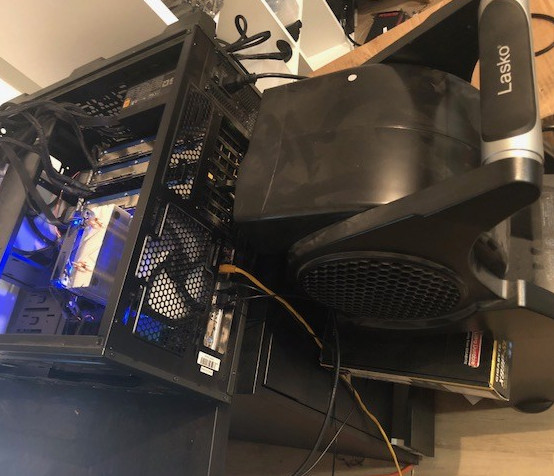
The workstation build exposed another hard fact: many similar motherboards did not boot or see the cards. The working board needed the right BIOS and large-memory setting, while ordinary case fans did not move enough air. The builder used a blower and higher-powered fans behind the cards. The case also gave different total and per-card speed claims, so measured hashrate is safer than copying a headline number.
Failure Signs and Security Checks
Most rig faults leave a clue long before the money disappears. Zero hashrate, missing temperature data, stale shares, and a rig that drops off the network all deserve a stop-and-check step. Randomly changing clocks and power limits can hide the real fault.
Common rig warnings
- Zero hashrate after a card or memory change
- A first-boot prompt that may mean BIOS or drive trouble
- A missing IP address on the network
- A read-only file system caused by a drive problem
- Fan-control trouble after a different GPU model is added
- Crashes during driver load or dataset creation
- Stale or rejected shares from unstable clocks
- Missing GPU or memory temperature readings
- A mining API exposed without a need
- A lost card, disk, or boot image with no tested spare
Keep one tested boot drive and one spare power supply where you can reach them. Limit monitoring ports, back up wallet recovery keys, and test the restore path before you need it. A fast payout address is no help if it was pasted with one missing digit or points to a service you cannot reach.
If hashrate drops to zero, stop tuning. Check the card, driver, boot disk, BIOS, and power path first.
A Simple First Rig Plan
I would build this in plain steps rather than ordering a wall of parts. The goal is a machine you can measure, cool, stop, and pay out from. That same record will tell you whether a second bit coin mining rig makes sense.
Build and first-test order
- Choose the coin, algorithm, wallet, and pool before buying hardware
- Pick hardware that runs the chosen algorithm
- Write down the full parts list, including cables and cooling
- Check wall power, circuit load, heat, and service access
- Install one trusted operating-system image
- Add one mining program and connect one test wallet address
- Run a short test while reading hashrate, power, and each GPU temperature
- Measure hashes per watt, fees, and the first real payout
- Write down the shutdown and recovery steps
- Expand only after the first rig runs, stops, and restarts cleanly



Comments on “How Bit Coin Mining Rigs Work and What to Check Before You Build”
No comments yet. Be the first to share your thoughts.